Why Your Cat’s Anxiety Keeps Getting Worse (And What Actually Works)
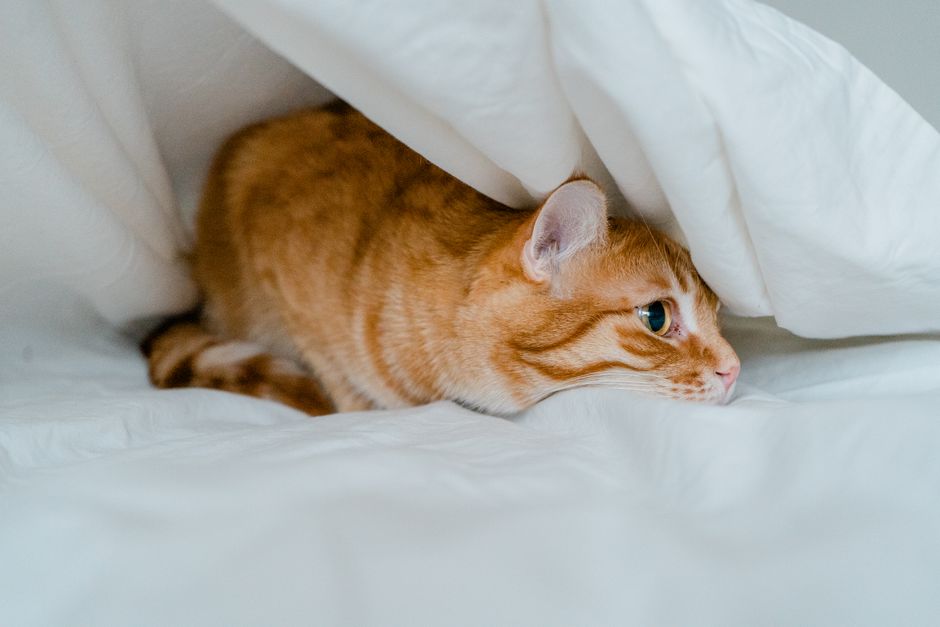
Have you ever watched your cat pace the same stretch of floor for the tenth time in an hour and thought — is this actually anxiety, or am I just projecting?
I asked myself that for years. I was the person rolling my eyes at “cat therapists” and dismissing pet anxiety products as marketing fluff for people who anthropomorphize too hard. Then I spent about eighteen months watching my own cat deteriorate — overgrooming until she had a visible bald patch on her belly, hiding every time a door slammed, refusing to eat if anything in her routine shifted by even an hour. I had to sit with the uncomfortable possibility that I was wrong.
Turns out, I was. And the experience of being wrong taught me more about feline anxiety than any amount of confident skepticism ever could.
Is Cat Anxiety Even a Real Thing, or Are We Just Projecting Human Emotions Onto Pets?
This was my first question — and honestly, a fair one to ask. The skeptical position isn’t stupid. We do project. We do over-medicalize normal animal behavior sometimes. But the science here is more settled than I expected.
Cats have a stress-response system that functions similarly to mammals broadly — including humans. When a cat perceives a threat, their body releases cortisol and adrenaline. Their heart rate increases. Their digestive system slows. The problem is that cats in domestic environments often can’t resolve that response through the behaviors that would normally discharge it in the wild — hunting, fleeing, marking large territories. So the stress compounds.
The American Association of Feline Practitioners has published clinical guidelines acknowledging anxiety as a legitimate diagnosis in cats, not a metaphor. Veterinary behaviorists — yes, that’s a board-certified specialty — treat it with the same rigor as any other medical condition. This isn’t fringe wellness territory. It’s clinical veterinary medicine.
What changed my mind wasn’t reading about it, though. It was watching a vet point to the bald patch on my cat’s stomach and say, matter-of-factly, “This is psychogenic alopecia. She’s over-grooming because she’s chronically stressed.” Hearing a diagnosis attached to something I’d been watching for months made it impossible to keep dismissing.
Why Does the Anxiety Keep Getting Worse Instead of Better?
This is the part nobody really explains well — and it’s the thing I wish someone had told me earlier.
Cat anxiety tends to be self-reinforcing. Here’s the cycle: your cat gets stressed by something — a new pet, a move, construction noise, a change in your schedule. She hides or overgrooves or stops eating. You respond by giving her extra attention, or by removing the stressor when possible, or by keeping the house quieter. That last part sounds helpful, but it can actually reinforce the idea that the world is dangerous. The cat doesn’t learn that she can handle stress — she learns that stress goes away when she avoids it. Avoidance becomes the coping strategy. And avoidance-based coping makes anxiety worse over time, not better.
There’s also the sensitization factor. Repeated exposure to stressors without resolution can lower the threshold at which a cat’s nervous system fires a threat response. A cat who was once only anxious around strangers might, after months of unmanaged stress, start reacting to changes in lighting, new smells, or your tone of voice. The baseline shifts downward. That’s why “just wait it out” is genuinely terrible advice — and I say that as someone who gave that advice to myself for two years.
So What Does the Current Evidence Actually Say About Solutions?
I’m going to be honest with you about the landscape here, because it’s messier than most articles admit.
There are products, supplements, and interventions that have some evidence behind them — and there are many more that are selling on vibes and marketing copy. I’ll walk through what I actually know and where the evidence is solid versus shaky.
Pheromone Diffusers
Feliway is the most established brand in this category. It’s a synthetic version of the feline facial pheromone — the scent cats deposit when they rub their face on things to mark them as safe. There is peer-reviewed research supporting its use for stress reduction in cats, particularly for situational anxiety like moving, vet visits, or introducing a new pet. It’s not a miracle product, and it doesn’t work for every cat. But it’s the intervention I’d reach for first because the risk profile is essentially zero and the mechanism makes biological sense.
Plug the diffuser in near where your cat spends the most time, not near the stressor itself. That’s a mistake I made — I put it near the front door because that’s where the anxiety was. The point is to create a baseline of safety in her core territory.
Environmental Enrichment — The Boring-Sounding Thing That Actually Works
I resisted this for a long time because “enrichment” sounds like a Pinterest project. But the logic is solid: cats need to hunt, climb, hide, and survey their territory. When they can’t, stress accumulates with no outlet. Providing those outlets changes the nervous system’s baseline.
Practically, this means:
- Vertical space — cat trees, shelves, window perches. High ground makes cats feel safe because it’s harder for threats to approach from above.
- Hiding spots that the cat can enter and exit freely. A covered bed in a quiet corner does more than you’d think.
- Puzzle feeders or food-dispensing toys. Making a cat “hunt” for even part of her meals engages her predatory drive and gives stress somewhere to go.
- Consistent, predictable routines. Cats don’t do well with chaos. Feeding at the same times, keeping furniture arrangements stable, minimizing sudden loud noise — these aren’t overindulgences. They’re regulation tools.
The enrichment changes I made cost under $60 total. The difference in my cat’s baseline behavior was visible within three weeks. I’m not saying this to be persuasive — I’m saying it because I was the person who thought “just play with your cat more” was useless advice, and I was wrong about that too.
Prescription Medication — The Option People Skip Too Long
Here’s where I’ll say something that might be unpopular: a lot of cat owners wait far too long to have a medication conversation with their vet, because of stigma around “medicating your pet for emotions.” I sat in that camp. I thought it meant I’d failed somehow, or that I was over-pathologizing.
For cats with chronic, generalized anxiety — not just situational stress — behavioral interventions alone often aren’t enough. A cat whose nervous system is running at a sustained high pitch needs help getting that baseline down before she can even benefit from enrichment or training. It’s hard to learn that the world is safe when your body is chemically insisting otherwise.
There are FDA-approved medications for anxiety in cats. Your vet or a veterinary behaviorist — you can find board-certified specialists through the American College of Veterinary Behaviorists — can evaluate whether your cat is a candidate. This isn’t a conversation to avoid out of principle. It’s a conversation to have with someone qualified.
Supplements: L-Theanine, Casein, and the Rest
This category is where I’d urge the most caution. There are a lot of cat calming supplements on the market in 2026 — chews, drops, powders. Some contain ingredients like L-theanine (an amino acid found in tea) or hydrolyzed milk casein, which have some evidence for mild anxiolytic effects in humans and, to a lesser degree, in animals. The research specifically in cats is limited. Effect sizes in the studies that do exist tend to be modest.
I’m not saying don’t try them. I’m saying: don’t let them substitute for a real conversation with your vet, and don’t assume “natural” means either safe or effective at the doses on the label. Some supplements interact with medications. Some simply don’t do much. Go in with calibrated expectations.
What About All the New Tech and Apps Promising to Track Cat Stress?
There’s been a real uptick in wearable and camera-based products claiming to monitor your cat’s stress levels through movement patterns, vocalizations, or posture. Some of these are genuinely interesting from a data standpoint. The challenge is that most of them are not validated against clinical measures of feline stress in any rigorous way — at least not yet, not publicly.
I’d treat them the way I’d treat a step counter for humans: useful for noticing patterns over time, not useful as a diagnostic tool. If your cat’s activity drops sharply for a week, that’s worth a vet visit. If an app tells you your cat’s “stress score” is a 7.3 out of 10, I’d be skeptical of what exactly that number means.
Is There Anything That Reliably Makes Cat Anxiety Worse That Most Owners Don’t Realize?
Yes — and it’s the one I feel most sheepish about, because I did it constantly.
Comforting a cat who is in an anxious state by picking her up, holding her, or following her around with attention. It feels loving. It is loving. It also communicates, from the cat’s perspective, that there is something worth being alarmed about — because you, her safest person, are also acting concerned. Cats read your emotional state. When you rush over with a worried face every time she hides, you’re not reassuring her. You’re confirming the threat.
The harder, more effective approach: act calm and normal. Engage in your regular activities. Let her come to you. If she does come to you, give her calm, quiet attention — not excited, over-the-top reassurance. It’s counterintuitive, and it took me a while to actually do it consistently instead of just knowing it intellectually.
When Is It Time to See a Veterinary Behaviorist Instead of Just Your Regular Vet?
Your regular vet is the right first stop — always. But if your cat’s anxiety is severe, has persisted despite trying environmental changes and pheromone products, or involves aggression, self-injury, or complete refusal to eat, a veterinary behaviorist is worth the referral. These are specialists with specific training in the neuroscience of animal behavior and the treatment of behavioral disorders. They’re not pet psychics. They’re clinicians.
The wait time for a specialist appointment can be long depending on where you are in the US. Your vet may be able to handle initial medication management while you wait. Ask specifically — don’t assume they’ll offer it without prompting.
The Part I Didn’t Expect to Be True
Managing my cat’s anxiety changed my own behavior more than I anticipated. The consistency, the calmness, the deliberate enrichment — it required me to be more present and more regulated in my own household. Whether that’s a feature or a side effect, I genuinely can’t say. But I noticed it.
Cat anxiety isn’t a personality quirk or an owner’s overactive imagination. It’s a real physiological state with real behavioral consequences, and it compounds when left unaddressed. The solutions that work — environmental enrichment, pheromone support, behavioral strategies, and when appropriate, medication — aren’t complicated. They’re just consistent. And consistency is the part that’s actually hard.
If your cat’s anxiety has been getting worse despite your efforts, the most likely explanation isn’t that nothing works. It’s that the pieces haven’t been put together in the right order, with the right support. That’s a solvable problem.



Publicar comentário