Keep Your Indoor Cat Stimulated Without the Mess
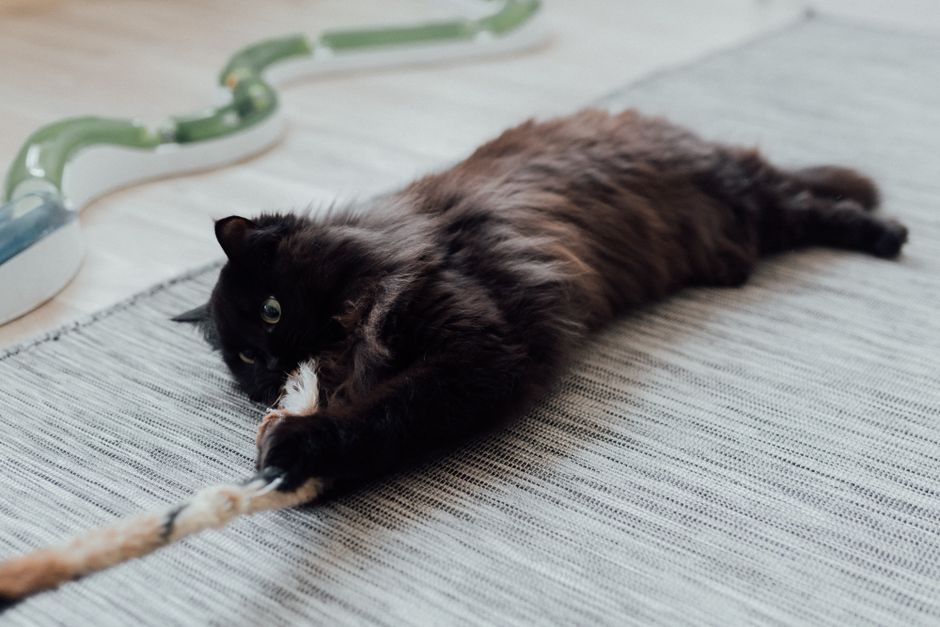
It’s 11:14 p.m. and your cat has knocked the TV remote off the coffee table for the third time tonight. Not because he wants to watch something. Because he has absolutely nothing else to do — and frankly, neither did he at 3 p.m., when he shredded the corner of your couch cushion just enough to be annoying but not enough to justify replacing it.
If that sounds familiar, you’ve probably already Googled “indoor cat enrichment” and ended up with a list of tips that felt like they were written by someone who has never actually owned a cat. “Buy a puzzle feeder!” Sure. My cat sniffed it once, sat on it, and walked away.
Here’s the thing most of those articles miss: the problem isn’t that your cat is bored — it’s that your cat has no agency. Wild cats make dozens of small decisions every hour: where to walk, what to stalk, when to retreat, what to investigate. Your indoor cat makes almost none. That’s the gap you’re actually trying to close, and once you see it that way, the whole approach changes.
1. Why “More Toys” Is the Wrong Starting Point
Adding toys to a cat’s environment without structure doesn’t address the agency problem — it just adds clutter. Most cats ignore a pile of toys within 48 hours because novelty wears off fast and there’s no reason to engage. You don’t need more stuff; you need a rotation system and a reason to hunt.
Studies on feline behavior have consistently shown that cats are hardwired for a predatory sequence: stalk, chase, pounce, catch, eat, groom, sleep. When indoor cats can’t complete that loop, you get what behaviorists call “redirected behavior” — scratching furniture, midnight zoomies, or obsessive meowing at windows. The fix isn’t distraction. It’s giving the loop somewhere to go.
The American Association of Feline Practitioners has published guidelines on environmental enrichment that specifically call out the importance of simulating hunting behavior — not just providing objects to bat around. If you haven’t read their resources, they’re worth a look.
2. The Rotation Rule That Actually Works
Take every toy your cat owns right now and divide them into three groups. Put two groups in a bag in the closet. Leave one group out. In five days, swap one group. Your cat will treat toys he hasn’t seen in a week like they’re completely new — because to him, they basically are.
I started doing this with my own cat, Mercer, after he completely ignored a $34 wand toy I’d bought on impulse. I rotated it out for ten days. When it came back, he went absolutely feral for it — knocked a glass of water off the counter in the process, but that’s beside the point. The toy hadn’t changed. The context had.
- Rotate every 5–7 days, not weekly on a fixed schedule (cats notice patterns)
- Keep 2–3 items out at a time maximum — too many choices leads to ignoring all of them
- Store “away” toys in a sealed bag so they don’t lose scent novelty
3. Vertical Space Is Worth More Per Square Foot Than Any Toy
If you can only do one physical change to your home, make it vertical. Cats feel safest — and most stimulated — when they can survey their environment from height. A cat who can get up to 5 or 6 feet has effectively doubled their usable territory without you adding a single square foot of floor space.
You don’t need an elaborate cat tree that looks like a bad sculpture from a 1990s mall pet store. Wall-mounted shelves (there are several brands that make cat-specific floating shelves that don’t look terrible in an apartment) can create a “cat highway” along one wall for under $80 in materials. Add a window perch at the top and you’ve built something your cat will use every single day.
One specific detail that matters: placement near a window with bird or squirrel activity is worth more than any electronic toy on the market. Mercer spends roughly 40 minutes a morning watching the oak tree outside my living room window. That’s 40 minutes of mental engagement I didn’t have to do anything to provide, once the perch was in place.
4. Feeding as Enrichment — Not Just Nutrition
This is where you can get the most return with the least mess, and most cat owners completely skip it. Instead of putting a bowl down twice a day, use part of your cat’s daily food portion as a training or foraging exercise.
Hide 10–15 pieces of dry kibble in three or four spots around the apartment before you leave for work. Different spots every day. Your cat will spend 20–30 minutes tracking them down, which activates the hunt sequence in a low-key, mess-free way. No puzzle feeder required — just a little deliberate placement.
For cats on wet food only (mine included, because he has opinions about kibble), a lick mat with a thin smear of food works surprisingly well. He gets 3 minutes of licking, which sounds trivial, but licking is genuinely calming for cats — it’s part of the post-hunt grooming cycle, neurologically. The mess factor is minimal if you use a mat with suction cups in the shower or on a hard floor.
5. The One Week I Tracked What Actually Got Used
I spent one week in March writing down every interaction Mercer had with enrichment items, just to see what was actually pulling his attention. The results were humbling.
The $60 automated laser toy? Used for four minutes total, across seven days. The cardboard box from an Amazon delivery? Used for 47 minutes on day one, 22 minutes on day two, ignored by day four. The window perch? Used every single morning, without exception, for an average of 35–40 minutes.
The foraging kibble I hid before leaving for work? He found all of it within 25 minutes each day — I set up a camera to check. And on Thursday, when I forgot to hide any, he sat at the spot where I usually put the first piece and looked at the door for about ten minutes. That was a little heartbreaking, honestly.
What didn’t work on day three: I tried hiding kibble in a location he’d never investigated (on top of the bookshelf), and he didn’t find it. I found it myself on Friday, slightly stale. Lesson — start with locations he already explores, then gradually introduce new ones.
6. What Doesn’t Work (And Why People Keep Trying It Anyway)
Let me be direct about four common enrichment approaches that are mostly a waste of time and money:
- Automated laser pointers left running unsupervised. The hunt sequence requires a “catch” at the end. A laser never gets caught. Cats who play with lasers regularly without a physical toy to “catch” at the end can develop compulsive behaviors — chasing light spots, fixating on reflections. If you use a laser, always end the session by directing the beam onto a physical toy your cat can pounce on.
- Cat “TV” videos on loop. A few cats genuinely engage with bird videos on a tablet or TV. Most watch for two minutes and walk away. It’s not stimulating in the way actual window watching is, because there’s no scent, no air movement, no sound variation. You’re not doing harm — but you’re not doing much good either.
- Catnip on everything, all the time. Catnip works because it’s novel. If your cat has access to it constantly, the response diminishes significantly within a few weeks. Reserve it for specific situations — introducing a new scratcher, making a toy interesting again — and it stays effective.
- Getting a second cat “for company.” This might work. It also might create a stressed, territorial situation that makes both cats worse off. A second cat is not enrichment — it’s a relationship, with all the complexity that implies. If your cat has never shown interest in other cats, adding one to solve a boredom problem is a significant gamble.
7. The Mess Problem Is Usually a Setup Problem
A lot of cat owners avoid enrichment because they’ve had bad experiences with feathers everywhere, spilled water from knocked-over bowls, or litter tracked across a puzzle feeder. The mess isn’t inevitable — it’s usually a sign that the wrong tool is being used in the wrong location.
A few practical setups that contain the chaos:
- Keep wand toys in a dedicated drawer or hook — not on the floor, where they become trip hazards and lose their “special” status
- Use a placemat under any puzzle feeder to catch food scatter
- Avoid enrichment items with small loose parts if your cat is a demolisher — some cats are, and that’s just their personality
- Stick to one or two active enrichment sessions per day rather than leaving everything accessible all the time; it keeps your space livable and keeps the activities meaningful
8. Clicker Training Is the Underrated Option Nobody Talks About
Most people think of clicker training as a dog thing. It absolutely works with cats, and it’s one of the highest-value enrichment activities available because it requires your cat to think, not just react.
You can teach a cat to sit, touch a target stick, jump to a specific spot, or go into a carrier on cue — all in 5-minute sessions, two or three times a week. The mental effort involved in learning a new behavior is genuinely tiring in the best way. Mercer learned to “sit” in about four sessions. He now offers the behavior randomly when he wants attention, which is both useful and a little unsettling.
The equipment cost is basically zero — a clicker is $2 at most pet stores, and you can use a small piece of his regular food as a reward. No mess, no batteries, no subscription required.
Start Here, This Week
You don’t need to overhaul your apartment or spend $200 on enrichment gear. Three small moves will get you further than any product purchase:
- Tonight: Take half the toys on the floor right now and put them in a bag in a closet. Just half. See how your cat responds to the remaining ones over the next few days.
- Tomorrow morning: Hide five pieces of dry food (or a small amount of a treat your cat likes) in three different spots before you leave. Don’t make it hard — just not in the bowl.
- This weekend: Spend 15 minutes with a wand toy and end the session by letting your cat catch and hold the toy for a full minute before you put it away. That ending matters more than the whole session before it.
None of that creates mess. None of it requires a trip to the store. And if your cat is anything like mine, the results will show up by Wednesday — in the form of a slightly less demolished couch cushion and a cat who, for once, looks like he has somewhere to be.




Publicar comentário