The Best Exotic Pets for Beginners (And Why They’re Easier Than You Think)
My neighbor knocked on my door one Saturday morning holding a small cardboard carrier. Inside was a hedgehog — a tiny, spiky creature named Pancake — and she was panicking. “I had no idea what I was getting into,” she said. She’d bought him on impulse after seeing a video online. Two weeks in, she was already trying to rehome him. The thing is, Pancake wasn’t the problem. The setup was.
That’s the real issue with exotic pets, and it’s not what most people think. Everyone assumes the animal is the hard part. In reality, the hard part is the gap between what you imagined and what the animal actually needs — and that gap is almost always smaller than the internet makes it sound. Most exotic pets that beginners fail with weren’t too difficult. They were just misunderstood before day one. Fix that, and you’ve fixed most of the problem.
Industry data from the American Pet Products Association has consistently shown that reptiles, small mammals, and birds collectively account for millions of owned pets in the US — a number that keeps climbing as more people look for alternatives to dogs and cats. That’s not a trend. That’s a shift in how Americans think about companionship at home.
1. The Hedgehog: Yes, Even After Pancake’s Story
I’ll defend hedgehogs. Pancake’s owner wasn’t failed by the animal — she was failed by a pet store that handed her a care sheet with four bullet points and called it a day. Hedgehogs are solitary, nocturnal, and temperature-sensitive — they need their environment kept between roughly 72°F and 80°F or they’ll attempt hibernation, which can kill them. That’s the one non-negotiable.
Beyond that? They’re genuinely manageable. A single hedgehog needs a cage with at least 2 square feet of floor space, a solid-surface wheel (never wire — their legs catch), and daily handling to stay social. They eat a high-quality cat kibble — something with real protein as the first ingredient — plus occasional mealworms as a treat. The mealworms are honestly the most exciting part of owning one. Hedgehogs sprint toward them like they haven’t eaten in days, every single time.
Cost to get started: roughly $200 to $300 for the animal from a reputable USDA-licensed breeder, plus another $100 to $150 for a proper setup. Annual vet costs are low if you find an exotic vet beforehand — and you should find one before you bring the animal home, not during an emergency at 11pm on a Sunday.
2. Leopard Geckos: The Animal That Actually Taught Me Patience
I kept my first leopard gecko — a female I named Clementine — for eleven years. She outlived two apartments, one cross-country move, and a relationship. Leopard geckos are widely considered the best reptile for first-time owners, and they earn that reputation every time.
They’re ground-dwellers, so they don’t need tall enclosures — a 20-gallon tank works perfectly for one adult. They’re crepuscular, meaning they’re most active at dawn and dusk, which actually syncs well with most people’s work schedules. They don’t need UVB lighting the way bearded dragons do, though many keepers now provide low-level UVB anyway for general health, which is a reasonable upgrade. What they do need is a proper temperature gradient: a warm side around 88°F to 92°F (belly heat for digestion) and a cool side around 70°F to 75°F.
Feed them crickets or dubia roaches dusted with calcium powder, three to four times a week for juveniles, twice a week for adults. That’s it. Clementine missed a feeding once because I forgot to order crickets — she was fine. She looked mildly annoyed, which is the gecko equivalent of a strongly worded letter.
Startup cost: $50 to $150 for the animal, depending on morph. Setup runs $150 to $250 if you buy quality equipment upfront instead of replacing cheap stuff twice.
3. Crested Geckos: The One You Can Keep at Room Temperature
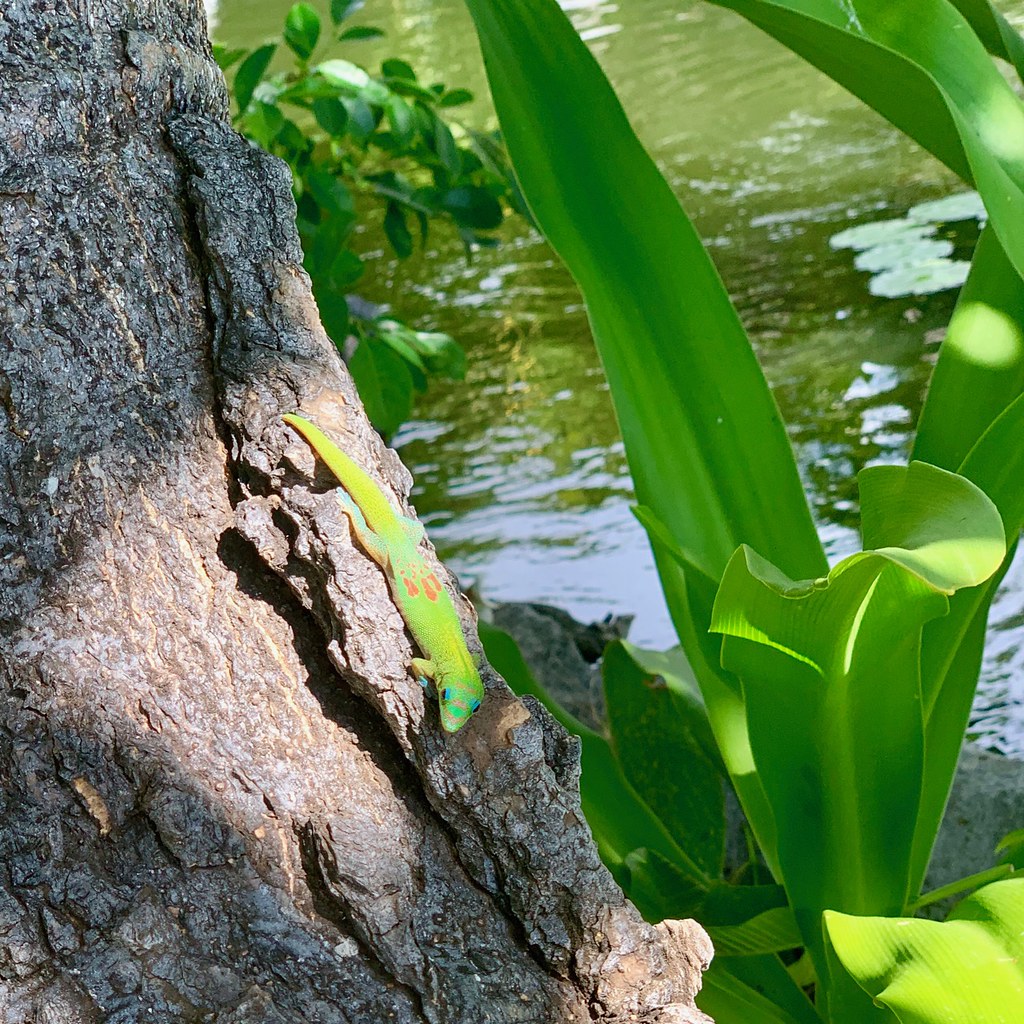
If the idea of managing heat mats and thermostats makes you nervous, crested geckos solve that problem almost entirely. They thrive at room temperature — between 68°F and 78°F — which covers most American homes without any additional heating equipment during most of the year. In winter, you might need a small space heater near their enclosure, but that’s a minor consideration.
They eat a commercially prepared diet — Repashy and Pangea are two brands that have been around long enough to have real track records — so you’re not hunting for live feeders every week. Crickets can be offered as an occasional supplement, but they’re not required. Crested geckos are also arboreal, meaning they like to climb, so a taller enclosure with branches and fake foliage is more important than floor space.
They’re also surprisingly handleable. They jump, and they’ll startle you the first few times, but with consistent, calm handling — five minutes a day works fine — most become genuinely relaxed in your hands. They don’t bite often. When they do, it’s more startling than painful. Think of it as a firm pinch from a creature that weighs about 35 grams.
4. Blue-Tongued Skinks: The Underrated Heavy Hitter
Most people haven’t heard of blue-tongued skinks until they stumble across a photo of one sticking out that absurdly bright blue tongue, and then they can’t stop thinking about it. That’s how I got into them. They’re chunky, slow-moving, and bizarrely dog-like in their personalities — they recognize their owners, they’re active during the day, and they actually seem to enjoy being handled once they trust you.
Northern blue-tongues (the most commonly available in the US) need a 4-foot by 2-foot enclosure at minimum, a temperature gradient similar to leopard geckos, and UVB lighting. They’re omnivores — their diet includes a rotating mix of protein (lean ground turkey, snails, dubia roaches), vegetables, and some fruit. Getting the diet rotation right takes a couple weeks to figure out, but once you have a rhythm, it’s maybe 15 minutes of prep twice a week.
The honest downside: they’re expensive. A healthy Northern blue-tongue from a reputable breeder runs $250 to $500. The enclosure and lighting setup adds another $300 to $400 if you do it properly. This is not a budget pet. But for someone who wants an exotic animal with genuine personality and a lifespan of 15 to 20 years, the upfront cost spreads out remarkably well.
5. Chinchillas: Soft, Fast, and Surprisingly Long-Lived
A chinchilla can live 15 years with proper care. That’s longer than most dogs. People walk into pet stores, see something that looks like a cartoon cloud, and buy one without processing that number. Fifteen years. Think about where you’ll be in 2041 before you commit.
That said — chinchillas are genuinely wonderful pets for the right person. They’re social (keep two if possible, same sex unless you want dozens of chinchillas), crepuscular like leopard geckos, and they have zero odor when their cage is cleaned regularly. Their biggest quirk is temperature sensitivity: above 75°F and they’re in danger of heat stroke. If you live somewhere that gets brutally hot and your air conditioning is unreliable, that’s a real concern.
They need a large, multi-level cage, timothy hay available constantly, a high-quality chinchilla pellet, and dust baths two to three times a week — a small container of volcanic pumice dust, which they roll around in to clean their incredibly dense fur. Watching a chinchilla take a dust bath is one of the genuinely delightful small pleasures available to exotic pet owners. It looks like controlled chaos. They love it.
What Doesn’t Work: Four Approaches That Set Beginners Up to Fail
1. Buying from a pet chain store without researching the source. Big-box pet stores often source small animals from high-volume breeders with inconsistent health standards. The animal may look healthy under fluorescent lights. That’s not the same as being healthy. Find a breeder or rescue and ask questions. If they can’t answer basic questions about the animal’s history, walk away.
2. Setting up the enclosure the day the animal arrives. The enclosure should be running — temperature stable, humidity dialed in, hides in place — for at least 48 hours before the animal comes home. You want to know your equipment works before you need it to work. A heat mat that’s cycling wrong at midnight on day one is a bad situation.
3. Handling the animal constantly in the first week to “bond faster.” This is almost always counterproductive. New environments are stressful for exotic animals. Give them 5 to 7 days to settle — food in, water fresh, leave them alone. Once they’re eating regularly and not hiding 24/7, you can start short handling sessions. Forcing contact before they’re ready just teaches them to associate you with stress.
4. Relying only on YouTube for care information. YouTube is useful. It’s also full of well-meaning people with outdated or regionally specific advice. Cross-reference everything with at least one reputable care guide from a herpetological or small mammal society, and ideally with an exotic vet consultation before or shortly after getting the animal.
One Real Week: The Crested Gecko Test Case
A friend of mine — mid-30s, rents a one-bedroom in Austin, travels for work maybe once a month — got a crested gecko in January. She’d done two weeks of research, bought the enclosure in advance, and had a neighbor lined up to mist the tank on work trips.
Week one: gecko hid constantly, didn’t eat visibly. She panicked and texted me at 9pm asking if she’d killed it. I told her to check the Pangea dish in the morning. By day three, the dish was clearly being eaten overnight. Day six, the gecko was visible on a branch during her evening wind-down routine. By week three, it was eating in front of her.
Week four: she forgot to reorder Pangea and ran out mid-week. She bought crickets from a local pet store as a stopgap, dusted them with calcium, and the gecko ate fine. Not the ideal situation, but not a disaster either. That’s the real story of exotic pet keeping — it’s mostly smooth, occasionally improvised, and almost never as catastrophic as the anxiety makes it feel.
Start Here: Three Small Actions for This Week
Pick the one animal from this list that made you lean forward slightly while reading. Just one. Then do these three things before you spend a dollar:
- Find an exotic vet within 30 miles of your home who sees that specific species. Call and confirm. If there isn’t one, that matters — you need to know that now, not during an emergency.
- Join one species-specific online community — a subreddit, a Facebook group, a Discord. Spend one week reading posts before asking anything. You’ll learn more from real keeper questions than from any care sheet.
- Price out the full setup — enclosure, heating or lighting, substrate, hides, food for three months — before you price out the animal. If the setup number surprises you, that’s important information to have before you’re emotionally attached to a specific gecko or hedgehog.
The animal isn’t the hard part. The decision is. Make a good one, and the rest gets a lot easier than you expected.


Publicar comentário