Keep Your Senior Dog Moving: Joint Health Tips That Actually Work

It was a Tuesday morning, somewhere around 7:15 a.m., when I watched my 11-year-old Labrador, Chester, try to get up from his bed in the corner of the kitchen. He’d been sleeping in the same spot for nine years. He knew the distance to his water bowl by heart. But that morning, his back legs buckled on the first attempt. He tried again. Then again. By the third try, he made it — but his tail wasn’t wagging the way it used to.
That image stuck with me longer than I expected. Not because it was dramatic, but because it was quiet. There was no yelp, no obvious injury. Just a dog who’d aged faster than I’d noticed, and a gap between what I was doing for his joints and what he actually needed.
Here’s the thing most pet owners get wrong: joint health in senior dogs isn’t primarily a pain management problem — it’s a mobility maintenance problem. By the time your dog is visibly struggling, the joint degeneration has often been building for two, three, sometimes four years. The goal isn’t to treat the crisis. It’s to delay it long enough that it barely arrives.
1. Understand What “Senior” Actually Means for Your Dog’s Joints
The word “senior” gets applied too loosely. A 7-year-old Chihuahua and a 7-year-old Great Dane are in completely different biological chapters. Large and giant breeds — think German Shepherds, Rottweilers, Bernese Mountain Dogs — tend to experience joint deterioration earlier, sometimes as soon as age 5 or 6. Smaller breeds may not show significant arthritis-related changes until 9 or 10.
This matters because it changes when you start intervening. Veterinary organizations have generally suggested that large-breed dogs cross into “senior” status around age 7, but some orthopedic specialists push that threshold earlier for dogs over 50 pounds. Ask your vet to assess your dog’s joint health at the 6-year wellness exam, not the 8-year one. That two-year window is where early support does the most good.
Canine arthritis is more common than most owners realize. Studies in veterinary medicine have consistently estimated that a significant majority of dogs over age 8 show some degree of osteoarthritis on imaging — numbers ranging from 60% to over 80% in some older populations. The dog doesn’t always tell you. They’re built to hide it.
2. The Supplement Stack That’s Actually Worth Your Money
Walk into any Petco or PetSmart and you’ll see an overwhelming wall of joint supplements. Most of them are fine. A few are genuinely useful. The research — though still evolving — points consistently toward a handful of ingredients:
- Glucosamine and chondroitin sulfate: These remain the most studied combination for canine joint support. They work best as a preventive measure or in early-to-mid stage arthritis, not as emergency pain relief. Give them time — at least 6 to 8 weeks before you evaluate results.
- Omega-3 fatty acids (EPA and DHA): Fish oil is arguably the most evidence-backed supplement for reducing joint inflammation in dogs. The dose matters. For a 70-pound dog like Chester, my vet recommended around 2,000 mg of combined EPA and DHA daily — not just any fish oil capsule, but one with a verified concentration. I used a veterinary-grade brand, not the generic bottle from the dollar store rack.
- Green-lipped mussel: A less mainstream option but with a reasonable body of research behind it. Contains a unique profile of fatty acids and glycosaminoglycans. Some dogs respond to it noticeably well; others don’t. Worth trying if fish oil alone isn’t enough.
What I’d skip: any supplement that leads its marketing with “instant results” or that buries its actual ingredient concentrations in fine print. Dose and bioavailability matter more than brand name.
3. Movement Is Medicine — But the Wrong Movement Makes It Worse
This is where I made my biggest mistake with Chester. When I noticed he was moving stiffly, my instinct was to rest him more. Give his joints a break. Let him sleep it off. That’s exactly backwards.
Controlled, low-impact movement is one of the most effective tools for managing canine joint disease. It keeps the muscles surrounding the joint strong — and those muscles are what stabilize and protect the joint when the cartilage is compromised. A dog that rests too much loses muscle mass, which accelerates the joint’s vulnerability.
The key word is controlled. Short, consistent walks on flat, soft surfaces are far better than one long weekend hike. Fifteen minutes twice a day on a grass trail beats 90 minutes on concrete every Saturday. Swimming, if your dog tolerates it, is exceptional — nearly zero joint impact, full muscle engagement. Some veterinary rehab centers offer underwater treadmills, which are worth every dollar if your dog is post-surgery or in significant pain.
One concrete rule: avoid the “weekend warrior” pattern. Monday through Friday your dog barely moves, then Saturday you take him on a three-mile trail. That pattern causes more flare-ups than consistent moderate activity ever would.
4. What Your Dog Sleeps On Is a Legitimate Medical Decision
I put off buying an orthopedic dog bed for almost two years because I thought it was a luxury item — something marketed to people who dress their dogs in Halloween costumes. I was wrong about that.
A dog with compromised joints who sleeps on a thin mat or directly on hardwood floors is essentially spending 12 to 14 hours a day applying pressure to already inflamed tissue. Memory foam or high-density orthopedic foam dog beds distribute body weight more evenly, reduce pressure points, and make it easier for the dog to rise without torquing their hips or shoulders.
The bed should be low enough that your dog doesn’t have to jump up into it, but firm enough that they don’t sink through the foam entirely. Chester started using a 4-inch memory foam bed about three months into our revised routine. Within two weeks, he was getting up from it more smoothly — not perfectly, but measurably better.
5. Weight Management: The Unsexy Truth
If your senior dog is carrying even 10% extra body weight, their joints are working significantly harder than they should be. This isn’t a cosmetic issue. The mechanical load on hip and knee joints increases disproportionately with body weight — meaning a dog that’s 10 pounds overweight isn’t putting just “a little more” stress on their joints. It’s a compounding problem.
Your vet can give you a body condition score (BCS) on a 9-point scale. A score of 4 or 5 is ideal. Most dogs I’ve seen in waiting rooms over the past few years are sitting at 6 or 7 — not obese, but softer than they should be. Getting a senior dog from a BCS of 7 to a BCS of 5 through caloric reduction and appropriate activity can produce visible mobility improvements in as little as three months.
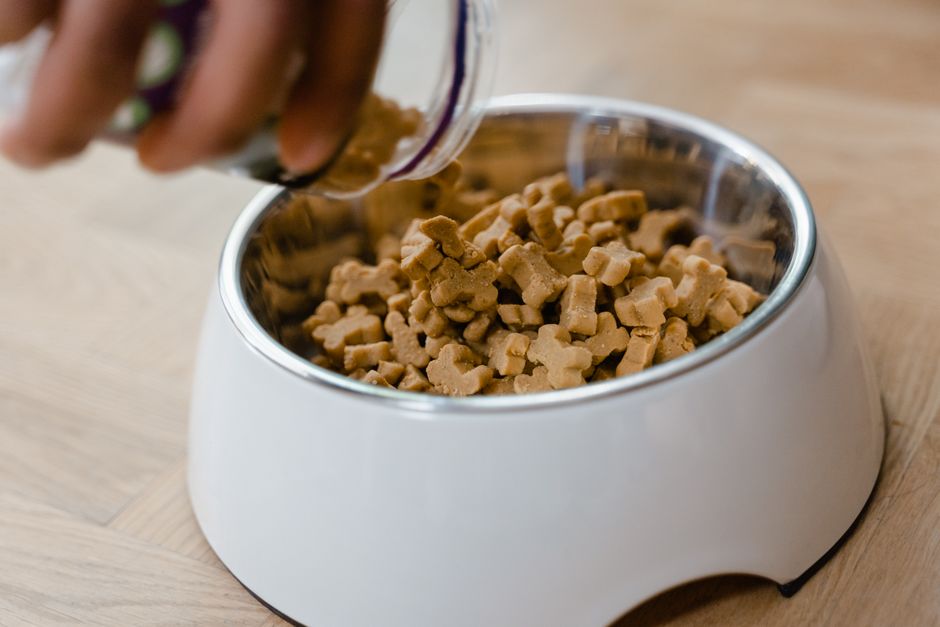
The hard part: senior dogs are often fed out of love and habit. The bowl gets filled because it’s always been filled. A measured approach — weighed portions, fewer treats, or switching to a lower-calorie senior formula — feels mean at first. It isn’t. It’s probably the single most impactful thing you can do for a dog with arthritic hips.
What Doesn’t Work (And Why I’m Saying It Plainly)
There are a few common approaches that get a lot of airtime in dog communities but don’t deliver what they promise:
- Giving human NSAIDs like ibuprofen or naproxen: This is dangerous, not just ineffective. These drugs are toxic to dogs at even moderate doses and can cause serious gastrointestinal and kidney damage. If your dog needs anti-inflammatory medication, your vet will prescribe something designed for their physiology. Don’t improvise.
- Relying on supplements alone without addressing weight or movement: Glucosamine won’t compensate for a sedentary, overweight lifestyle. It doesn’t work that way. Supplements are one layer of a system — not the whole system.
- Assuming “he’s just getting old” is a complete answer: Age explains the mechanism. It doesn’t mean there’s nothing to be done. I’ve seen dogs at 13 with better mobility than some at 9 because their owners intervened early and consistently.
- Waiting until the dog cries or stops eating to take action: Dogs are stoic. By the time they’re visibly suffering, they’ve been managing pain quietly for months, sometimes longer. A subtle reluctance to climb stairs, a slight hesitation before lying down, or sleeping more than usual — these are the real early signals.
One Real Week, Honestly
After Chester’s bad Tuesday, I built a routine. Here’s what it actually looked like in practice, not the idealized version:
Morning: a 20-minute walk around the neighborhood, mostly grass, slow pace. Fish oil capsule hidden in a small piece of chicken breast. Wednesday that week it rained hard and we skipped the walk entirely — I felt guilty about it and probably shouldn’t have. One missed day is not the problem.
Evening: another 15-minute walk before dinner. His glucosamine chew mixed into his food. On Friday he was stiff again after a car ride — joints don’t like being folded into a backseat for two hours — so I did a gentle 5-minute stretch routine the vet tech had shown me. It helped.
By Sunday he got up from his orthopedic bed on the first try. Tail wagging. It wasn’t a miracle. It was just a week of small, consistent choices stacking up.
Three Things You Can Do Before This Week Ends
Don’t overhaul everything at once. That’s how routines collapse on day four.
This week, do these three things only:
- Book a vet visit specifically to discuss your dog’s joint health — not just the general annual exam. Ask for a body condition score and ask whether a joint supplement is appropriate for your dog’s current state.
- Add one short daily walk that you weren’t doing before. Even 10 minutes on grass counts. Consistency over the next 30 days matters more than intensity.
- Look at where your dog sleeps tonight. If it’s on a hard floor or a flattened mat, order an orthopedic bed this week. It’s a one-time purchase that pays off for the rest of their life.
Chester is 12 now. He still gets up a little slowly some mornings. But he walks to his water bowl on the first try, every time. That’s the goal — not reversing aging, but keeping the gap between your dog and the floor as small as possible, for as long as possible.


Publicar comentário