Keep Your Dog Clean Without the Guilt: Eco-Friendly Pet Bath Products That Work
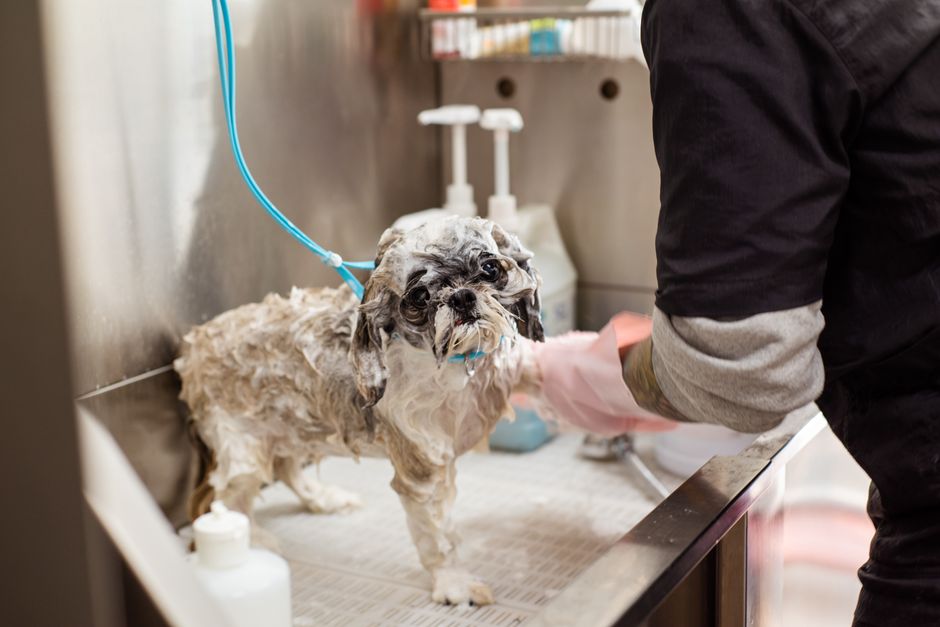
My dog Biscuit — a 40-pound mixed breed with strong opinions about bath time — once left a trail of soapy paw prints across my kitchen floor while I stood there reading the back label of his shampoo bottle. Methylchloroisothiazolinone. I couldn’t even pronounce it, let alone explain why it needed to be anywhere near my dog’s skin. That was the moment I started actually paying attention to what goes into pet bath products, and what ends up rinsed down the drain into the water supply.
Here’s the part most eco-friendly pet care guides skip: the problem isn’t that you’re using “the wrong shampoo.” The problem is that the personal care industry — including the pet sector — operates under almost no meaningful ingredient regulation in the US. The FDA doesn’t require pre-market approval for most cosmetic or pet grooming ingredients. That means a product can be labeled “natural” or “gentle” while still containing synthetic preservatives, synthetic fragrances, and surfactants that don’t biodegrade cleanly. The “eco-friendly” label on the bottle is largely marketing until you read the ingredient list yourself.
That changes how you shop. Instead of trusting the front of the bottle, you start reading the back. And once you know what to look for, the switch to genuinely cleaner products is surprisingly straightforward.
Why “Natural” on the Label Means Almost Nothing — and What to Look for Instead
The word “natural” has no legal definition in US pet product labeling. A shampoo can contain one drop of aloe vera and call itself natural. What actually matters is the full ingredient list — specifically, the surfactants (what creates lather), the preservatives, and the fragrance sources. Look for surfactants derived from coconut or corn (like sodium coco-sulfate or decyl glucoside), preservatives like rosemary extract or vitamin E, and “fragrance” sourced from essential oils with the specific oils named. If the label just says “fragrance” with nothing else, that’s a catch-all term that can legally contain hundreds of undisclosed synthetic chemicals.
Industry data shows the US pet care market has grown significantly in recent years, with pet grooming products representing one of the fastest-growing segments. As that market expands, so does the greenwashing. More products claim eco credentials; fewer actually earn them.
A few things worth checking:
- pH balance for dogs: Dog skin has a pH of roughly 6.2 to 7.4 — more neutral than human skin. Human shampoos, even “natural” ones, are often too acidic and can disrupt your dog’s skin barrier over time.
- Biodegradability: Surfactants that don’t biodegrade accumulate in waterways. Decyl glucoside and coco-glucoside break down cleanly. Sodium laureth sulfate (SLES) does not.
- Packaging: A genuinely eco-conscious brand thinks about the bottle, not just the formula. Recyclable HDPE plastic, refill pouches, or concentrated formulas that reduce plastic per wash all matter.
The Ingredients Worth Avoiding (and Why They’re Still Everywhere)
Four ingredients appear repeatedly in conventional pet shampoos and are worth avoiding if you’re trying to reduce your environmental and health footprint. They’re still common because they’re cheap, effective, and shelf-stable — not because they’re safe for ecosystems or necessarily ideal for sensitive skin.
- Sodium lauryl sulfate (SLS) / sodium laureth sulfate (SLES): Strong detergents that strip natural oils. SLES in particular can be contaminated with 1,4-dioxane during manufacturing — a compound the EPA classifies as a likely human carcinogen. It also doesn’t biodegrade quickly.
- Methylchloroisothiazolinone (MCI) and methylisothiazolinone (MI): Synthetic preservatives linked to skin sensitization and aquatic toxicity. They show up in many “gentle” formulas.
- Artificial dyes: Serve zero functional purpose. Contribute synthetic compounds to wastewater.
- Synthetic musks (like “fragrance” as a standalone ingredient): Many synthetic musk compounds are persistent in aquatic environments and have been detected in fish tissue in studies going back decades.
None of this means your dog will get sick from one bath with a conventional shampoo. The concern is cumulative — for your dog’s skin over hundreds of baths, and for waterways that receive what goes down every drain in your neighborhood.
What Actually Works: A Realistic Product Framework
You don’t need a 12-step eco-grooming routine. Biscuit gets three things: a solid shampoo, a conditioner for his dryer patches, and a rinse-free spray for between-bath touch-ups. That’s it. Here’s what I’ve learned about each category.
Shampoo: Concentrate Over Dilute
Concentrated formulas are the single biggest quality-of-life upgrade in eco pet care. A 4-oz bottle that dilutes 10:1 means you’re buying less plastic, shipping less water weight, and often getting a cleaner ingredient list because the brand is focused on formula quality rather than bulk. Several smaller US-based pet care brands have moved to this model in the last few years. Look for a dilution ratio on the label — if there isn’t one, the product is full-strength and you’re paying to ship mostly water.
Conditioner: Only When You Actually Need It
Most short-haired dogs don’t need conditioner at all. Biscuit has a medium-length coat with some wiry patches, and I use conditioner maybe once every three baths — only on his shoulders and back where dryness shows up. Overusing conditioner, even a clean one, adds unnecessary product to rinse water. The eco choice here is restraint as much as ingredient selection.
Waterless/Rinse-Free Sprays: The Underrated Middle Option
Between full baths — which for most healthy dogs should be no more than once every two to four weeks — a waterless spray handles spot cleaning. These typically use witch hazel, aloe vera, or diluted apple cider vinegar as a base. They use almost no water, produce no soapy runoff, and keep your dog smelling decent without stripping skin oils. I keep one near the back door for post-muddy-walk situations. It doesn’t replace a bath, but it means I give fewer unnecessary baths, which is better for Biscuit’s coat and for water use.
One Month of Switching: What Actually Happened
I switched Biscuit to a concentrated, plant-based shampoo in early spring of last year. First bath went fine — good lather, no reaction, coat looked normal. Second bath, three weeks later, I diluted it wrong (went 12:1 instead of 10:1 because I eyeballed it) and it didn’t rinse as cleanly as I’d like. His coat felt slightly waxy for a day. Third bath I used a measuring cup. Problem solved.
What I didn’t expect: his dry patch behind his left ear — which I’d been treating with an oatmeal spray for two years — mostly cleared up within six weeks. I can’t say with certainty it was the shampoo change, but that’s the only variable I adjusted. A groomer I trust mentioned that synthetic preservatives can cause low-grade skin irritation that looks like dryness. Make of that what you will.
What didn’t work: I tried a DIY shampoo recipe involving castile soap and coconut oil that I found in a popular homesteading blog. Castile soap has a high pH (around 9-10), which is too alkaline for dog skin. Biscuit’s coat was dull and he scratched more for two weeks after. I won’t do that again. Homemade doesn’t automatically mean better — chemistry matters.
What Doesn’t Work: Four Approaches to Skip
I have opinions here, and I’ll defend them.
1. Buying whatever has the most green imagery on the packaging. Leaves, earth tones, the word “pure” in a handwritten font — none of it tells you anything about the formula. This is the most common eco-grooming mistake. Flip the bottle. Read the ingredient list. If you can’t find an ingredient list, that’s your answer.
2. Using human “clean beauty” shampoo on your dog. Even genuinely clean human shampoos are formulated for human skin pH. Regular use disrupts your dog’s skin barrier and can lead to increased shedding and flaking. I know it feels logical — if it’s clean enough for you, it’s clean enough for them — but the biology doesn’t work that way.
3. Bathing too frequently to compensate for using a “gentler” product. Some people assume that because a natural shampoo is milder, they can bathe their dog more often. The opposite logic applies. More frequent bathing, regardless of formula, strips natural oils and stresses skin. Most dogs with healthy coats need a full bath every two to four weeks at most, sometimes less.
4. Treating “biodegradable” as a complete answer. A product can be biodegradable and still contain ingredients that cause skin reactions, arrive in non-recyclable packaging, or be manufactured using environmentally harmful processes. Biodegradable is one data point, not a full endorsement. Ask about the packaging, the concentration, and the full ingredient list.
How to Read an Ingredient List Without a Chemistry Degree
You don’t need to know every compound. Three questions get you most of the way there:
- What’s the first surfactant listed? Ingredients are listed in descending order by concentration. If the first or second ingredient is sodium lauryl sulfate, that’s a conventional detergent-heavy formula regardless of what else is in it.
- Is “fragrance” or “parfum” listed without explanation? If yes, and there’s no mention of essential oils or natural fragrance sources, you’re looking at a synthetic fragrance blend with undisclosed components.
- What’s the preservative system? Phenoxyethanol (used in low concentrations) is generally considered lower-risk than MCI/MI. Rosemary extract or vitamin E as preservatives suggest a cleaner formulation — though they also mean a shorter shelf life, which is actually a good sign.
If all three answers point toward plant-derived, named, and transparent — you’re probably looking at a genuinely cleaner product.
The Packaging Problem Nobody Talks About Enough
Even the cleanest shampoo formula arrives in a plastic bottle. The US recycling system is inconsistent — what gets accepted curbside in one city gets landfilled in another. A few things actually move the needle on packaging impact:
- Refill programs: Some smaller pet care brands offer refill pouches at a lower price point. The pouch uses significantly less plastic than a rigid bottle.
- Concentrated formulas: A product that dilutes 10:1 means one bottle replaces what would otherwise be ten. That math matters.
- Solid shampoo bars: These exist for pets, though the selection is narrower. Zero plastic packaging, long shelf life, often very clean formulas. The challenge is that dogs tend to be squirmy and a bar requires more control than a poured liquid — but for calm dogs, it’s worth trying.
Three Small Things to Do This Week
Don’t overhaul everything at once. Here’s what’s actually worth doing right now:
1. Flip your current shampoo bottle and photograph the ingredient list. Just look at it. See if “fragrance,” SLS, or methylisothiazolinone appears. You’re not throwing it away today — you’re just getting informed before you buy the next bottle.
2. When you run out, replace with a concentrated formula. Search for pet shampoos with a listed dilution ratio and a full ingredient list on the brand’s website. If they don’t publish their ingredients online, move on.
3. Pick up a waterless spray for between-bath days. It costs less than $12 at most pet retailers, reduces how often you need a full bath, and cuts down on both water use and product exposure. Witch hazel-based versions work well for most coat types.
That’s it. Three things. Biscuit’s doing fine, the dry patch is gone, and I can now pronounce everything on his shampoo bottle. That’s enough of a win for me.



Publicar comentário