Why Vets Warn Against Raw Dog Diets (and What to Feed Instead)
A friend of mine called me on a Tuesday evening, panicked, because her Labrador — a four-year-old named Biscuit — had been on a raw chicken diet for about six weeks and had just tested positive for Salmonella. The dog seemed fine, actually. Tail wagging, appetite normal. But her two-year-old had been kissing that dog on the mouth every single day. That’s when the pediatrician got involved, and suddenly a “natural feeding philosophy” turned into a very uncomfortable conversation with two different doctors.
Here’s the thing that most raw diet advocates won’t tell you upfront: the risk isn’t really about your dog. Dogs have been eating raw meat for thousands of years, and yes, their digestive systems handle bacterial loads that would flatten a human. The real problem is the contamination radius — the people, surfaces, and other animals that come into contact with a raw-fed dog, its bowl, its saliva, and its stool. The debate gets framed as “what’s best for my dog’s health,” but the more honest framing is “what does feeding raw meat in my home actually do to my household’s risk profile?” Those are two very different questions.
1. The Bacterial Load Is Real — and It Doesn’t Stay in the Bowl
The FDA has conducted testing on commercially available raw pet food products over multiple years and consistently found pathogens including Salmonella and Listeria monocytogenes in a meaningful percentage of samples — contamination rates that would trigger recalls if found in human food products at the same frequency. These aren’t hypothetical risks buried in a footnote. They show up in the agency’s actual surveillance data, which is publicly available on the FDA website.
What happens after the bowl is filled is where things get complicated. A dog licks the bowl. Then licks its paws. Then licks your kid’s face. Or your face. The cutting board you used to portion the raw chicken — if it’s in the same kitchen where you prep dinner — becomes a transmission vector. Raw pet food packaging, left on the counter for three minutes while you scoop portions, can leave behind bacteria that survive on hard surfaces for hours.
I’ve talked to people who handle raw feeding extremely carefully — dedicated cutting boards, gloves, separate refrigerator shelf, immediate handwashing, no contact between raw food and anything that touches human food. And for those people, the risk is genuinely lower. But the reality of a Tuesday night at 6 p.m. with three kids running through the kitchen is not that careful. Most households aren’t operating at food-safety-lab standards, and the gap between best-case protocol and actual daily behavior is where illness happens.
2. Nutritional Imbalance Is the Other Problem Nobody Talks About
Even setting aside the bacterial contamination issue, raw diets carry a second, quieter risk: they’re nutritionally incomplete more often than not. A study published in the Journal of Nutritional Science analyzed a sample of raw dog food recipes — both homemade and commercial — and found that the majority did not meet minimum nutritional standards established for dogs. Calcium-to-phosphorus ratios were off. Iodine was deficient in many formulations. Vitamin D, which dogs can’t synthesize from sun exposure the way humans do, was frequently inadequate.
This matters because nutritional deficiencies in dogs are slow and silent. You don’t see them in week six. You might see them in year two, when your dog develops bone density problems or a thyroid issue that your vet traces back to years of iodine deficiency. By then, the diet has been “working great” for so long that nobody connects the dots.
The dogs most at risk from nutritional gaps in raw diets are puppies (whose skeletal development depends on precise mineral ratios), pregnant or nursing dogs, and seniors with already-compromised organ function. These are exactly the dogs whose owners are often most motivated to “do everything right” — which is what makes the risk so painful when it shows up.
3. Who Is Actually in Your Household Matters
The American Veterinary Medical Association and the Centers for Disease Control have both issued position statements recommending against raw protein diets for pets in households with immunocompromised individuals, pregnant women, young children, and elderly people. This isn’t abstract caution. Salmonella and Listeria infections can be life-threatening for people in those categories.
If your household is two healthy adults in their 30s with no kids, no elderly visitors, and nobody undergoing chemotherapy — the calculus looks different than it does for a family with a toddler or a grandparent who comes over every Sunday. That context matters, and it’s something your vet should be asking about when raw feeding comes up. If they’re not asking, ask yourself.
4. What Doesn’t Work (and Why People Keep Trying It Anyway)
There are a few common approaches to raw feeding risk management that sound reasonable but consistently fall short:
- Freezing the meat before feeding it. Freezing reduces some parasites — notably certain Toxoplasma and tapeworm species — but it does not reliably kill Salmonella, E. coli, or Listeria. These bacteria survive freezing and resume activity once the food thaws. Plenty of pet owners believe the freeze step sanitizes the meat. It doesn’t.
- Buying “human-grade” raw meat. Human-grade means the meat was processed in a facility approved for human consumption — it doesn’t mean the meat is pathogen-free. Human food products get recalled for Salmonella contamination regularly. Grade designation is about facility standards, not microbial guarantee.
- Relying on your dog’s “natural immunity.” Dogs do handle bacterial loads better than humans, but they’re not immune. There are documented cases of dogs developing salmonellosis from raw diets — and even when the dog stays asymptomatic, it sheds bacteria in its stool for weeks, contaminating your yard, your floors, and anything the dog touches.
- Using commercially prepared raw food and assuming it’s been tested. Some commercial raw pet food companies do rigorous high-pressure processing (HPP) to reduce pathogens. Many do not. The labeling doesn’t always make this clear, and the pet food industry’s regulatory oversight is not equivalent to human food standards. “Commercially prepared” is not a synonym for “safe.”
5. A Real Before-and-After: What Switching Back Looked Like
My friend with Biscuit spent about three weeks after that diagnosis researching her options. She’d started raw feeding because Biscuit had chronic loose stools on his previous kibble — a common reason people make the switch, and a legitimate frustration. The raw diet had actually helped with that. His digestion seemed better, his coat looked good, and she felt like she was doing something meaningful for him.
After the Salmonella episode, she moved him to a high-quality cooked commercial diet — one of the options that uses whole ingredients and goes through a cooking process that eliminates pathogens. Within about three weeks, his stool consistency was comparable to what it had been on raw. The coat didn’t deteriorate. He didn’t lose weight. What changed was that she stopped being anxious every time her daughter hugged the dog.
Was it a perfect transition? Not immediately. The first brand she tried gave him gas bad enough that she switched again after ten days. The second option stuck. That’s a normal adjustment period, not a sign that cooked food is wrong for the dog. Digestive systems need time to recalibrate — about two to four weeks, generally, when switching between significantly different diet formats.
6. What to Feed Instead — Specifically
If you’re on raw because you want whole-food ingredients and minimal processing, there are paths that don’t require handling raw meat in your kitchen every day:
Gently cooked commercial diets — some pet food brands now offer refrigerated or frozen meals that are cooked to safe temperatures using whole ingredients. The cooking process eliminates the pathogen risk while preserving more nutritional integrity than traditional high-heat kibble extrusion. These tend to cost more than standard kibble — expect to pay somewhere between $6 and $12 per day for a medium-sized dog — but they’re a reasonable middle ground.
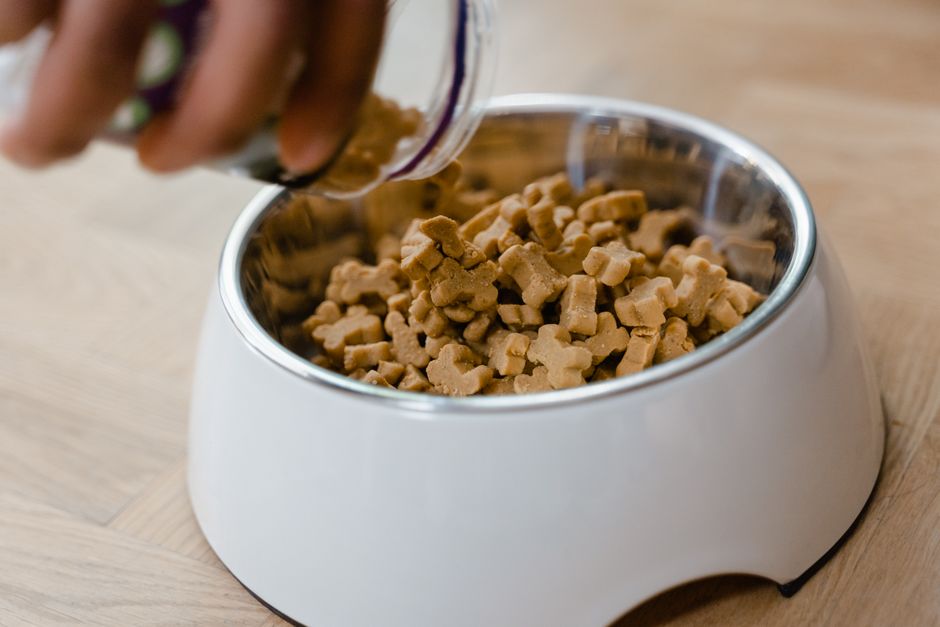
High-quality kibble with whole protein sources — not all dry food is created equal. Formulations that list a named protein (chicken, beef, salmon) as the first ingredient, carry an AAFCO statement indicating the diet is “complete and balanced,” and have been through feeding trials rather than just nutrient analysis are meaningfully different from the cheapest options on the shelf. Your vet can help you evaluate specific brands based on your dog’s size, age, and health status.
Fresh food toppers on a balanced base — if part of the appeal of raw is variety and fresh ingredients, adding cooked vegetables, plain cooked chicken, or canned fish (in water, not oil) on top of a nutritionally complete base diet gives you that without the contamination risk. Keep it to about 10% of the total calorie intake so you’re not unbalancing the base diet.
Whatever you choose, look for that AAFCO statement. It’s not a guarantee of perfection, but it means the diet meets minimum nutritional standards for dogs — which, as mentioned earlier, many raw formulations don’t.
7. The Conversation Worth Having With Your Vet
If your vet hasn’t asked about your dog’s diet in the last year, bring it up yourself. And if you’re currently feeding raw, be honest about it — vets can’t help you make a good decision with incomplete information, and judgment isn’t useful to either of you. The questions worth asking: Is my specific dog a good candidate for any dietary changes based on their current health? What are the signs of nutritional deficiency I should watch for? And — the question my friend wishes she’d asked earlier — who else in my house could be affected by how I’m feeding this dog?
The goal isn’t to make you feel bad about wanting to feed your dog well. That instinct is good. It’s just worth making sure the method matches the intention.
Three things you can do this week: Pull up the FDA’s raw pet food testing data and read one page of it — it takes about four minutes and puts the risk in concrete terms. Check your current dog food bag for an AAFCO “complete and balanced” statement; if it’s not there, that’s worth a conversation with your vet. And if you have a toddler or an immunocompromised person at home and you’re currently feeding raw, schedule that vet call before the end of the week — not because something is wrong, but because the information you get in that conversation is worth having now rather than later.



Publicar comentário