Why Your Vet Isn’t Solving Pet Obesity (And What Actually Works)

“Pet obesity” is one of those phrases that sounds clinical until you’re holding a cat that can’t groom its own backside or watching a Labrador struggle to stand up after a nap. It’s not just extra weight — it’s a metabolic state where the body is storing more energy than it’s burning, consistently, over time, and the animal has lost the biological signaling to self-correct. That distinction matters more than most people realize, and it’s exactly why the usual advice falls flat.
I spent several years working in veterinary clinic environments — first as a vet tech, then doing client education and nutrition consulting for a multi-doctor practice. I sat across from hundreds of pet owners and watched what actually moved the needle on weight loss, and what just made people feel better for a week before nothing changed. I also watched well-meaning vets inadvertently make the problem worse. Not out of negligence. Out of structural constraints most people never see.
So let me lay this out honestly — the case for your vet, the case against the current system, and what the research and my own experience actually point toward.
The Case For Your Vet: What They’re Getting Right
Before I sound like I’m throwing the whole profession under the bus, let me be fair. Veterinarians are often the first people to flag that a pet has a weight problem — and that flag matters. A good vet will rule out underlying conditions like hypothyroidism in dogs or hyperadrenocorticism (Cushing’s disease) that can cause weight gain independent of diet. That step is non-negotiable, and it’s not something you can Google your way through.
Vets also have access to body condition scoring (BCS) systems — standardized visual and tactile scales, typically rated 1–9, developed by organizations like the World Small Animal Veterinary Association (WSAVA). These give a more accurate picture than the scale alone, because muscle mass and fat distribution tell a different story than pounds. A vet using BCS correctly is doing something genuinely useful that most owners can’t replicate at home.
And when a pet has comorbidities — osteoarthritis, diabetes, heart disease — the vet’s involvement isn’t optional. Weight management in a diabetic cat, for instance, requires close monitoring of insulin dosing as the animal loses weight. That’s a medical process. I’ve seen what happens when owners try to manage it on their own with advice from Reddit threads. It doesn’t go well.
Where the Vet Visit Breaks Down
Here’s where I have to be honest about what I watched happen in practice, repeatedly.
The average wellness appointment in a busy clinic runs somewhere between 15 and 20 minutes. In that window, the vet is covering vaccines, parasite prevention, dental assessment, organ function screening, and whatever the owner came in worried about. Weight — unless it’s a crisis — gets maybe two minutes. Sometimes it gets a pamphlet.
That’s not a character flaw. That’s a capacity problem. And it has real consequences.
What typically happens is the vet says something like “Buddy’s a little overweight, you might want to cut back on the food.” The owner nods. Nothing changes. Six months later, Buddy is the same weight or heavier, and the vet says it again. I watched this cycle play out so many times I stopped counting.
The other piece that rarely gets addressed in the exam room: the food itself. Most prescription weight management diets are higher in fiber to create satiety, but the caloric density and ingredient quality vary enormously. Some pets lose weight well on them. Others — particularly cats — end up with muscle loss instead of fat loss because the protein ratio isn’t right for their metabolism. The difference between fat loss and muscle wasting matters enormously for long-term health, and it almost never comes up in a standard appointment.
There’s also a psychological dynamic that nobody talks about: the shame spiral. Many owners already feel guilty before they walk into the clinic. When the vet mentions weight, even gently, some owners hear it as an accusation. They leave feeling bad, maybe defensive, and the emotional association with the clinic becomes negative. I’ve had owners tell me directly that they dreaded weigh-ins because of how they felt afterward. That’s not a setup for behavioral change — that’s a setup for avoidance.
The Food Industry Angle Nobody Mentions
This is the part that genuinely surprised me when I started paying attention to it.
Pet food labeling in the US is regulated by AAFCO (the Association of American Feed Control Officials), which sets nutritional adequacy standards — but AAFCO doesn’t regulate calorie counts the way you’d expect. “Complete and balanced” on a bag tells you the nutrient profile meets minimums. It doesn’t tell you whether the caloric density is appropriate for a sedentary indoor cat or a senior dog with a slowing metabolism.
Feeding guides on pet food bags are also notoriously generous — often calibrated for active animals at the higher end of a weight range. If you follow the bag exactly for an already-overweight, low-activity pet, you may be feeding more than needed by a significant margin. I’ve seen this be the entire explanation for why a dog wasn’t losing weight despite the owner swearing they were “following the vet’s advice.”
I’m not saying manufacturers are acting in bad faith. I’m saying the system isn’t designed with weight management as a primary goal — and it shows.
What Actually Moves the Needle
After years of watching what worked and what didn’t, here’s my honest read:
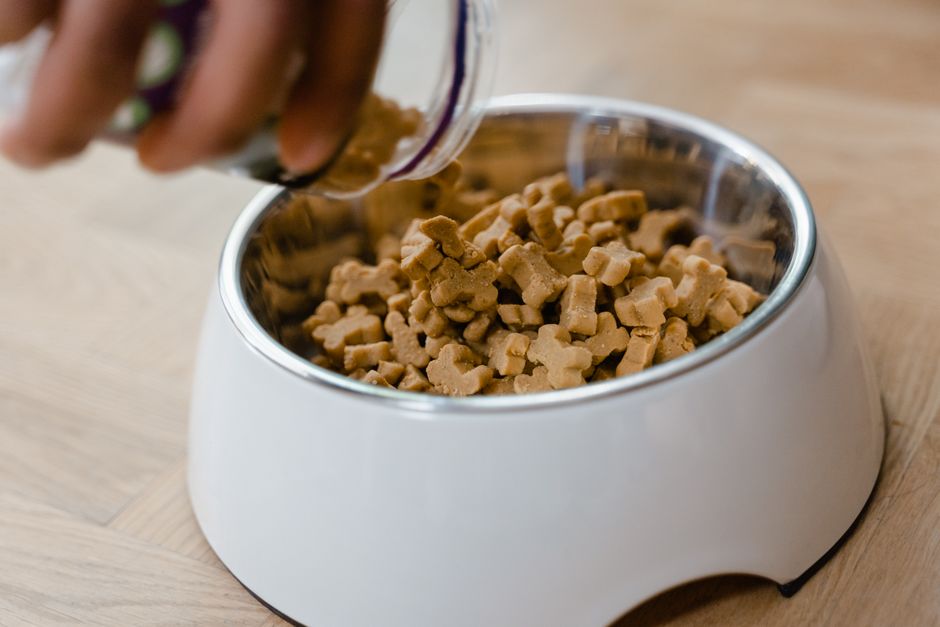
Measuring food by weight, not volume
Cups are imprecise. A “cup” of kibble can vary by 20–30% depending on how tightly it’s packed, the size of the pieces, and how the cup was filled. A kitchen food scale — a $12 investment — eliminates that variance entirely. This single change made a visible difference for pets whose owners implemented it. It sounds almost too simple, but the gap between “a cup” and an actual measured serving is often where the extra calories live.
Structured feeding over free-feeding
Free-feeding — leaving food out all day — works fine for some cats. For overweight pets, it almost never does. Portioned meals with defined windows teach the animal’s body a rhythm and make it much easier to track actual intake. It also makes the owner more conscious of how much is going in, which matters behaviorally as much as metabolically.
Treating calories as calories — including treats
This one stings a little because treats are how most owners express love for their pets. But a small dog on a 300-calorie-per-day plan can blow 20–30% of that budget on three “small” treats. I’ve had owners swear their dog wasn’t eating much, then walk through the treat math with me and go quiet. Switching to low-calorie treats (many vegetables work fine for dogs — plain green beans, for instance) or simply using a portion of the daily kibble allotment as treats keeps the bond without the caloric blowback.
Exercise that’s realistic and consistent
Here’s my unpopular opinion: for most overweight pets, exercise alone won’t solve the problem. The math doesn’t work out — a 60-pound overweight dog burns a relatively small number of calories on a 20-minute walk compared to what’s coming in from food. But exercise does matter for muscle maintenance, metabolic health, and mental state, which all support the weight loss process. The goal isn’t to exercise the weight off — it’s to exercise to preserve the lean mass while you reduce intake.
For cats, the conversation is different. Cats don’t walk on leashes. Environmental enrichment — puzzle feeders, wand toys, vertical spaces — increases activity in ways that accumulate over a day. Puzzle feeders in particular do double duty: they slow eating and add physical engagement.
A recheck protocol that’s actually about accountability
This is where I part ways with the “just come back in a year” model. Weight loss in pets — especially cats — needs to be slow and monitored. In cats, rapid weight loss can trigger hepatic lipidosis, a potentially fatal liver condition. The general guidance I’ve seen in clinical literature points toward no more than 1–2% of body weight lost per week for cats. That requires actual tracking, not annual checkups.
Some practices now offer dedicated nutrition consultations, sometimes with a veterinary technician rather than the vet, specifically to address this gap. If yours doesn’t, ask about it. The ASPCA and veterinary nutrition organizations have been pushing for more structured weight management programs within general practice — it’s becoming more common, though not yet universal.
The Honest Case Against Prescription Diets
I want to spend a moment here because prescription weight management foods are often the first tool a vet reaches for — and they’re not wrong to do so, but they’re not always right either.
The pros: they’re formulated specifically for caloric restriction with nutrient adequacy maintained. They’re convenient. Many pets do lose weight on them.
The cons: they can be expensive. Some formulations are heavy on grain-based fillers to create bulk. For cats especially — obligate carnivores with specific protein requirements — a high-fiber, lower-protein diet can lead to muscle loss that looks like success on the scale but isn’t. A cat who loses 2 pounds but half of that is muscle is in a worse metabolic position than before.
My position: prescription diets can be a legitimate tool, but they shouldn’t be prescribed without a conversation about protein levels, the individual animal’s activity level, and what success actually looks like beyond the number on the scale. If your vet recommends one and you have questions, ask specifically about protein percentage and what monitoring schedule they recommend.
Where I’ve Changed My Mind
When I started in vet tech work, I was pretty confident that owner education was the main bottleneck. If people just understood portion sizes and calorie math, the problem would largely solve itself.
I don’t believe that anymore.
The emotional dimension of pet feeding is genuinely underestimated. Food is how many owners communicate love, comfort their pets during stressful events, and manage their own guilt about time away from home. Telling someone to “just feed less” without addressing that layer is like telling someone to “just eat less” — technically accurate, largely useless.
What I’ve come to think works better is reframing the behavior rather than just restricting it. Give the food-motivated owner a low-calorie treat option so they can still give treats. Give the “clean plate” owner a smaller bowl so the visual of a finished meal still happens. Work with the psychology, not against it. That shift took me a few years to really absorb.
A Honest Caveat Before You Walk Away
Everything I’ve described here comes from a specific vantage point — clinical environments, client education, and a lot of time watching what worked in practice. That’s real experience. But it’s also not a substitute for a relationship with a vet who knows your specific animal.
There are things I can’t tell you from here: whether your pet’s weight gain has an underlying endocrine cause, whether a particular food is appropriate given your animal’s kidney function or cardiac history, or what the right caloric target is for a pet I’ve never examined. Those answers require a professional who can actually put hands on your animal.
What I’m pushing back against isn’t the veterinary profession — it’s a system where weight management often gets squeezed into the margins of a wellness visit and then treated as a solved problem when it isn’t. The solutions exist. They’re not complicated. But they require more follow-through than a two-minute conversation and a pamphlet about feeding guidelines.
If your pet is overweight and nothing has changed despite “following the advice,” that’s not a failure of willpower or love. It’s a sign the support structure around the advice wasn’t enough. Push for more — a nutrition consult, a recheck schedule, a concrete plan with numbers attached. You’re allowed to ask for that. And your pet deserves it.


Publicar comentário