Bearded Dragons for Families: What Parents Actually Need to Know
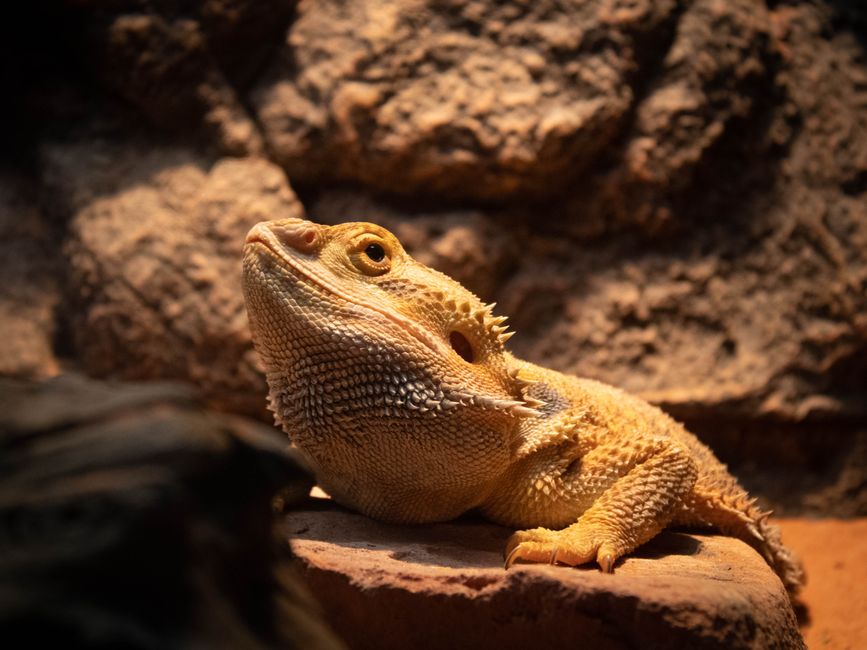
My neighbor’s seven-year-old daughter named her bearded dragon “Pancake” and carries him around on her shoulder like a tiny, scaly parrot. Last Saturday, I watched her spend 45 minutes just sitting with him in a patch of sunlight by the back door — no screens, no arguing, no noise. Her mom told me afterward that Pancake has done more for her daughter’s morning routine than any reward chart ever did. I’ve heard variations of that story a dozen times now, and it made me want to write something honest about what it actually takes to make this work for a family.
Here’s the non-obvious truth: the question isn’t whether bearded dragons are “good pets for kids.” Most of the content out there answers that. The real question is whether your family is set up to actually care for one — because the dragon will be fine either way. It’s the humans who struggle. A bearded dragon can live 10 to 15 years in captivity. That’s longer than most family dogs stick around. You’re not buying a hamster. You’re making a decade-plus commitment that will outlast your kid’s current obsession by about nine years.
1. Why Bearded Dragons Are Genuinely Good for Family Life (When Done Right)
Bearded dragons tolerate — and often seem to enjoy — human interaction in a way that most reptiles don’t. They don’t bite reflexively, they don’t move fast enough to escape across the room, and they have a calm, almost curious temperament that makes them accessible for kids as young as five or six. That’s not marketing copy; it’s why they’ve become one of the most popular reptile pets in the US over the past two decades.
Industry tracking data consistently shows bearded dragons ranking among the top three most-kept pet lizards in North America. They’re docile enough for supervised handling, hardy enough to forgive beginner mistakes — within reason — and visually interesting enough that kids stay engaged well past the initial excitement phase.
- They respond to routine. Bearded dragons are diurnal, meaning they’re active during the day when your kids are actually awake and home. You’re not dealing with a nocturnal animal that your child never actually sees.
- They teach real biology. Feeding live insects, understanding thermoregulation, watching a shed — these aren’t abstract science class concepts anymore.
- They’re quiet. No barking at 6 a.m. No allergies triggered at a friend’s birthday party.
2. The Setup Cost Will Surprise You — Budget This Before You Say Yes
The dragon itself often costs less than the equipment to keep it alive. A juvenile bearded dragon from a reputable breeder typically runs $50 to $100. The proper enclosure, lighting, and heating for that same animal will cost you $300 to $600 upfront — sometimes more if you go with a quality UV-B setup.
Here’s what a realistic first-year budget looks like:
- 40-gallon enclosure (minimum for a juvenile): $80–$150
- UVB lighting (a non-negotiable): $40–$80 for the bulb, plus fixture
- Basking and ambient heat setup: $30–$60
- Digital thermometer/hygrometer: $15–$25
- Substrate, hides, decor: $40–$80
- First vet visit (exotic vet, not a standard vet): $75–$150
- Ongoing feeders (dubia roaches or crickets) + greens: roughly $30–$50/month
That last line matters. Crickets from a big-box pet store run about $0.10 each, and a juvenile dragon eats 20 to 60 per day. Many families switch to dubia roach colonies after a few months — cheaper long-term, less noise, no escape disasters. Your call, but factor in the math before you’re at the pet store at 7 p.m. on a Tuesday.
3. The UVB Situation Is Not Optional — This Is Where Most Families Cut the Wrong Corner
Bearded dragons are from the arid regions of Australia. In the wild, they bask under direct sun for hours. Without proper UVB lighting indoors, they cannot metabolize calcium, which leads to metabolic bone disease — a painful, progressive condition that’s unfortunately common in pet beardies kept under inadequate lighting.
A standard incandescent bulb does not provide UVB. A “reptile basking bulb” from the pet store does not provide UVB unless the packaging specifically says so. You need a linear T5 HO UVB bulb — something like a 10.0 or 12% UVB output — positioned no more than 12 inches from the basking spot, with no glass or plastic between the bulb and the dragon. Glass blocks UVB. This detail gets skipped constantly, and it costs dragons their health and families hundreds in vet bills.
Bulbs degrade before they burn out — most need replacing every 6 to 12 months even if they still look bright. Put a reminder in your phone calendar now.
4. A Real Week with a Bearded Dragon in a Family of Four
Here’s what an actual week looks like — not the highlight reel version.
Monday: My daughter fed him collard greens and dandelion greens in the morning before school. He ignored them until about noon. She was annoyed he didn’t eat while she watched.
Tuesday: We ran out of dubia roaches. Had to drive to the local reptile shop after soccer practice. The shop closed at 6:30 p.m. We got there at 6:28. That was not a relaxing evening.
Wednesday: Normal day. He basked, he pooped (always in the same corner — they do that), my son cleaned it out in about 90 seconds.
Thursday: He started a shed. His eyes looked cloudy, he was grumpier than usual, and my daughter was convinced he was dying. He was not dying. He was fine by Saturday.
Friday: We had friends over and their toddler grabbed at the enclosure glass for 20 minutes straight. The dragon pressed himself flat and turned slightly darker — stress response. We moved him to a quieter room. Important note: bearded dragons can and do show stress. Flattening the body, darkening the beard, glass surfing — these are real signals, not dramatics.
Saturday: He got an hour of supervised free-roam time in the living room. The kids sat on the floor with him. Zero screens. Genuinely peaceful.
Sunday: Enclosure cleaning — about 25 minutes total, split between my two kids.
The week wasn’t hard. But it required showing up every single day, even when nobody felt like it.
5. What Doesn’t Work: Four Common Family Approaches That Set Everyone Up to Fail
1. Making it “the kid’s pet” with no adult backup plan. I’ve seen this go wrong more times than I can count. A nine-year-old forgets to check the basking temp for three days. The dragon gets lethargic. Nobody notices until it’s a vet situation. Bearded dragon care requires adult oversight — permanently, not just for the first month. If you’re not willing to be the backstop, reconsider.
2. Starting with a wild-caught or unknown-source animal. Reputable breeders or established reptile rescues only. Big-box pet stores often source from large-scale breeding operations where animals are stressed, parasite-loaded, and mislabeled for age. Buying from a breeder who can tell you the dragon’s hatch date and parents’ history isn’t pretentious — it’s practical.
3. Using a 10-gallon or 20-gallon tank “for now.” There is no “for now” with enclosure size. An adult bearded dragon needs a minimum 4-foot-long enclosure — most keepers recommend a 120-gallon or custom 4’x2’x2′ build. Buying a starter tank and upgrading in six months doubles your cost and stresses the animal through multiple transitions. Buy the right size once.
4. Skipping the exotic vet visit. Regular vets often don’t have reptile training. An exotic animal vet — sometimes listed as a “herp vet” — is who you need. Finding one before an emergency is the move. In many mid-size US cities, there’s only one or two within reasonable driving distance. Know who yours is before 9 p.m. on a Sunday when something looks wrong.
6. Age-Appropriate Roles: Who Does What, and When
Bearded dragons are not good pets for children under five without heavy adult supervision during every interaction. The dragon isn’t dangerous — it’s the handling dynamic. Young children grip too tightly, move too fast, and can’t read the animal’s body language.
- Ages 5–7: Supervised feeding (dropping greens into the bowl), watching temp checks, gentle lap time with an adult present
- Ages 8–11: Spot cleaning, filling water dish, supervised insect feeding, learning to read body language
- Ages 12+: Full feeding responsibility, light cleaning, basic health monitoring, temperature logging
Adults own the UVB bulb replacement schedule, the vet relationship, and the monthly deep-clean. Every time, no exceptions.
7. The Emotional Upside Nobody Talks About
There’s a specific kind of quiet that happens when a kid sits with a calm reptile. No demands, no notifications, no performance. The dragon just exists, and the kid exists alongside it. Child development researchers have documented the calming effect that animal interaction — including with reptiles — can have on children’s stress responses, though most of the formal research focuses on dogs and cats. Anecdotally, parents of kids with anxiety, ADHD, or sensory sensitivities report that reptile care routines provide structure and a point of focus that’s hard to replicate with other interventions.
That’s not a reason to get a bearded dragon as therapy. It’s a reason to recognize that the value goes beyond a biology lesson.
Start Here: Three Small Steps This Week
If you’re genuinely considering this, don’t buy anything yet. Do these three things first:
1. Find your nearest exotic vet and call them. Ask what they charge for a new reptile exam. Ask if they see bearded dragons regularly. If they hesitate or say “we can try,” keep looking. This one phone call will tell you a lot about what you’re signing up for logistically.
2. Spend $0 and visit a reptile expo or a reputable local reptile rescue. Most major US cities have reptile expos several times a year. You can handle adult bearded dragons, talk to breeders directly, and see a range of setups without any purchase pressure. This is the single best way to know if your kid’s interest is real or theoretical.
3. Price out the full enclosure setup — not just the animal. Go to a reptile-specific online retailer and build a cart with everything a 4’x2’x2′ enclosure needs from scratch. Don’t buy it. Just look at the total. That number is the honest conversation you need to have as a family before anything else happens.
The dragon can wait. Your preparation can’t.


Publicar comentário