AI Vet Diagnosis Tools 2026: What Actually Works for Clinics
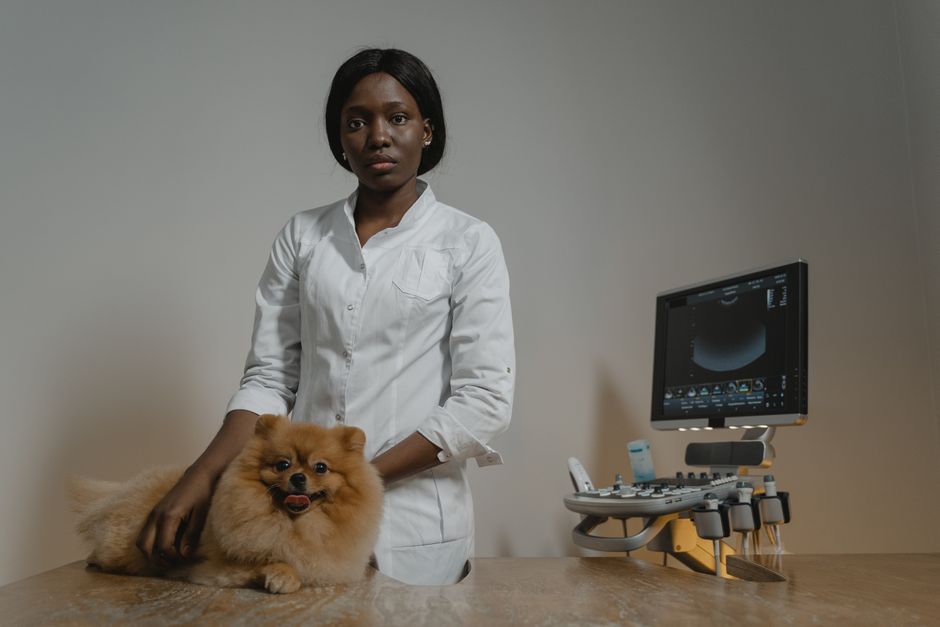
It’s 11:23 PM on a Tuesday, and Dr. Melissa Chen is staring at a radiograph of a seven-year-old Labrador’s chest. The dog came in coughing. The owner is in the waiting room, anxious. Melissa has seen maybe two thousand chest X-rays in her career, but something about this one feels off — a subtle density shift near the right caudal lobe. She pulls up the AI diagnostic assistant her clinic started using four months ago, uploads the image, and within 40 seconds gets a flagged result: possible early interstitial pattern, recommend correlation with clinical signs. She orders a follow-up CT. Three days later, the diagnosis is confirmed: early-stage fungal pneumonia, caught before it could turn into something catastrophic.
That story isn’t a product demo. That’s Tuesday night in a busy mixed-practice clinic in the Midwest.
Here’s the thing most conversations about AI vet tools get wrong: the debate isn’t really about whether AI is accurate. It’s about whether clinics know how to use it without either over-trusting it or ignoring it entirely. The tool didn’t diagnose that dog. Melissa did. The AI just gave her a second pair of eyes at 11 PM when she was running on three cups of coffee and a granola bar. That distinction matters more than any marketing slide about diagnostic accuracy.
1. What AI Vet Diagnosis Tools Actually Do in 2026
Most AI vet diagnostic tools on the market right now fall into one of three categories: imaging analysis (radiology, dermatology, cytology), clinical decision support (differential diagnosis generators based on symptom input), and lab result interpretation (flagging abnormal patterns in bloodwork or urinalysis). They do not replace a veterinarian’s judgment. What they do — when deployed correctly — is compress the time between “I’m not sure” and “here’s what I should check next.”
Imaging AI is the most mature category right now. Several platforms trained on hundreds of thousands of annotated veterinary radiographs can flag thoracic and orthopedic abnormalities with sensitivity rates that rival experienced radiologists for specific conditions. The keyword there is specific. These tools are strong on common patterns and weaker on rare presentations — which is the same limitation a first-year resident has, honestly.
Clinical decision support tools are more variable in quality. Some are genuinely useful for prompting a clinician to consider a differential they might have deprioritized. Others are basically symptom-to-disease lookup tables with a chatbot interface bolted on. The difference shows up fast when you use them with complex, multi-system presentations.
2. The Accuracy Question — What the Numbers Actually Show
Industry research published in veterinary informatics journals has shown that AI-assisted radiograph review can reduce missed finding rates by 20–35% in high-volume clinic settings, particularly for thoracic and musculoskeletal imaging. That range matters — it’s not uniform across all imaging types or all platforms.
A few honest caveats worth keeping in your back pocket:
- Most published accuracy data comes from controlled datasets, not messy real-world clinic conditions with variable image quality and positioning.
- Performance drops significantly when images are poorly collimated or when the patient was moving — which, if you’ve ever tried to radiograph a 90-pound anxious German Shepherd, is basically half your cases.
- False positive rates for some tools run higher than their marketing materials suggest. One clinic manager I spoke with mentioned pulling back on using a particular dermatology AI after it flagged “suspicious pigmentation” on three dogs in a row that turned out to be normal aging spots.
The takeaway: AI tools improve diagnostic accuracy on average, but averages hide variance. You need to run any tool through your own case mix for at least 60 days before trusting it as a real workflow asset.
3. A Real Clinic Workflow — Before and After
Here’s what a two-doctor small animal clinic in suburban Ohio looked like before integrating an AI radiology assistant, and what changed after six months.
Before: Radiographs were read on-site by the attending vet. Complex or uncertain cases got emailed to a telemedicine radiologist service — average turnaround was 4 to 18 hours. For urgent cases, that wait was genuinely stressful. The clinic was sending roughly 12 images per month for remote specialist review, at around $35–50 per read.
After: The AI tool flags potential abnormalities in under a minute. The attending still reviews every image — that hasn’t changed. But for the 70–80% of cases where the AI finds nothing unusual and the vet agrees, the workflow is faster and the vet has more documented confidence in the read. The telemedicine radiology service still gets called — but now it’s down to about 4–5 cases per month, the genuinely ambiguous ones. That’s a real cost reduction and a real time savings.
Where it didn’t work perfectly: the AI missed a subtle elbow OCD lesion in a young Labrador on a slightly oblique view. The vet caught it anyway because she wasn’t only relying on the AI — but it was a useful reminder that the tool has blind spots, especially on non-standard positioning.
4. What Doesn’t Work — Four Approaches to Drop
This is where I’ll take a position and stick with it.
Using AI as a shortcut for inexperienced staff to make calls above their license level. It doesn’t work and it’s dangerous. AI tools are decision support, not decision replacement. Clinics that hand a vet tech an AI interface and say “just flag what it says” are creating liability exposure and, more importantly, missing the whole point.
Buying a tool because it won an award or has impressive demo numbers, without a trial period. Almost every platform looks good on curated demo datasets. The real test is your specific patient population, your imaging equipment, and your clinicians’ workflow. No trial, no buy — period.
Using symptom-checker AI tools as a replacement for a proper history intake. These tools are only as good as what you put in. If a clinic is rushing history intake because “the AI will figure it out,” the differential quality tanks fast. Garbage in, garbage out — that hasn’t changed.
Treating every AI flag as a confirmed finding. This burns out your clients’ trust and your own credibility. If the tool flags something and your clinical exam doesn’t support it, say that out loud in the room. “The AI suggested we look at this, my exam doesn’t confirm it, here’s what I recommend.” Clients respect honesty. They don’t respect being told they need a $600 ultrasound because an algorithm said maybe.
5. The Tools Worth Paying Attention to Right Now
Without endorsing specific products — because this space changes fast and any ranking I give you today might be outdated in eight months — here’s what to look for in a platform:
- Transparent validation data — the company should be able to show you sensitivity and specificity numbers broken down by condition and image type, not just overall accuracy.
- PIMS integration — if the tool doesn’t connect cleanly with your practice information management system, the workflow friction will kill adoption within three months.
- Board-certified radiologist or specialist oversight in the tool’s development and ongoing validation. Several platforms now have veterinary specialists reviewing edge cases and retraining models on a rolling basis.
- Clear escalation pathways — the tool should tell you when it’s uncertain, not just give you a confidence score buried in a sidebar.
- AVMA and state board compliance — this is non-negotiable. The tool should be clearly positioned as decision support, with documentation that supports your medical records, not replaces them.
6. The Telemedicine Radiology Layer — AI Doesn’t Replace Specialists
Something that gets lost in the AI hype: the best-performing clinics in 2026 aren’t choosing between AI tools and specialist telemedicine. They’re using both, but smarter. AI handles the fast triage — the “is there something here worth a closer look?” question. Board-certified radiologists and internists handle the genuinely complex cases where nuance matters.
The economics actually work out. If AI cuts your specialist referral volume by 40%, you can afford to pay for better specialist reads on the cases that actually need them. Your telemedicine radiologist relationship gets stronger, not weaker, because you’re sending them the cases worth their attention.
One clinic director in the Pacific Northwest told me her team used to feel guilty “bothering” their telemedicine specialist with cases that turned out to be nothing. Now the AI pre-screens the obvious ones, and she says the specialist relationship has genuinely improved because the referral cases are more interesting and clinically complex. That’s a real and underreported benefit.
7. What Clinics Should Expect to Pay — and What ROI Looks Like
Pricing in 2026 ranges from roughly $200/month for entry-level imaging AI (typically radiology only, limited species support) to $800–1,200/month for full-platform clinical decision support with imaging integration and EMR connectivity. Enterprise pricing for multi-location hospital groups runs higher and is typically negotiated.
ROI calculation for a solo or two-doctor practice is actually pretty straightforward:
- Estimate monthly telemedicine radiology spend
- Estimate time cost of uncertain diagnostic delays (missed diagnoses, repeat appointments)
- Add any client retention value from faster, more confident diagnosis conversations
For most small-to-mid practices, the math works if you’re doing 30+ radiographs per month. Under that volume, the ROI case gets thinner and a shared telemedicine service may still be the better call.
Start Here — Three Small Steps This Week
You don’t need to overhaul your entire diagnostic workflow this month. Here’s what actually moves the needle:
Step one: Pick one specific diagnostic bottleneck in your clinic right now — whether that’s after-hours radiology reads, dermatology triage, or bloodwork interpretation — and spend 30 minutes researching which AI tools are specifically designed for that problem. One problem, one tool category. Not the whole market.
Step two: Ask two or three other clinic owners in your area — not competitors, just peers — what they’re using and what they’ve dropped. The informal peer network is still the best filter for what actually survives real-world use. Your state veterinary medical association’s regional meetings are a good place to have that conversation.
Step three: Before your next vendor demo, write down three cases from the last 90 days where diagnostic uncertainty caused a delay or a client conversation you’d rather not have again. Bring those cases to the demo and ask the vendor to show you how their tool handles them. If they won’t — or can’t — you have your answer.
The tools that work in 2026 aren’t magic. They’re fast, they’re consistent, and they make a tired veterinarian at 11 PM a little more confident in a hard call. That’s worth something. Just know what you’re buying before you sign.

Publicar comentário