Why Your Vet Isn’t Mentioning Your Pet’s Dental Disease
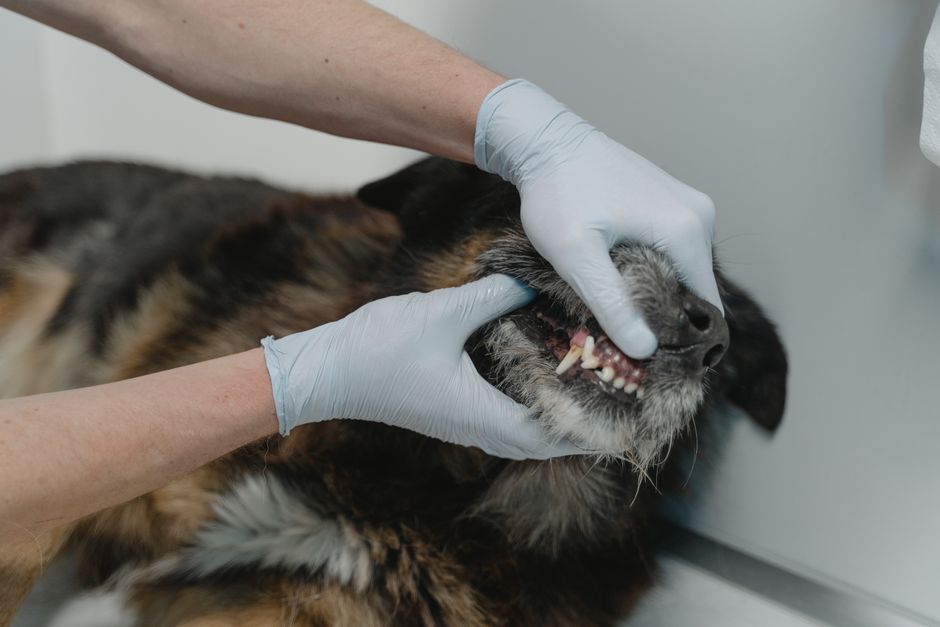
You’re sitting in the exam room at your vet’s office, your 8-year-old golden retriever panting next to you on the table. The vet checks his heart, his ears, his coat. She says he looks “great for his age.” You leave with a clean bill of health and a bag of heartworm prevention. But nobody said a word about the brown crust coating his back molars — the kind you can smell from three feet away.
That appointment? It happens millions of times a year across the US. And what gets skipped — or mentioned so briefly it doesn’t land — is dental disease. The thing that, quietly, is already affecting your pet’s kidneys, heart, and liver while you’re refilling their food bowl and calling them a good boy.
The Real Problem Isn’t Bad Breath — It’s What’s Upstream of It
Most pet owners think of dental disease as a cosmetic issue. Yellow teeth. Funky breath. Maybe some bleeding gums if it gets bad. The non-obvious truth is this: dental disease is a systemic condition, not a mouth condition. The bacteria living in your dog or cat’s gum pockets don’t stay there. They enter the bloodstream every time your pet chews, and they park themselves in the kidneys, the heart valves, and the liver — organs that don’t announce damage until a lot of it has already happened.
This is why dental disease earns the “silent killer” label. Not because it sneaks up dramatically, but because the damage is boring and slow and happening while everything else looks fine.
Why the Numbers Should Make You Stop Scrolling
According to the American Veterinary Dental College, periodontal disease is the most common clinical condition seen in adult dogs and cats — with most pets showing signs by age 3. By age 3. That’s not a typo. A dog who still plays fetch and eats everything in sight can already have Stage 2 periodontal disease, with bone loss happening around the roots of his teeth.
Industry surveys of veterinary practices consistently show that dental disease is diagnosed in a significant majority of adult pet patients — yet dental cleanings remain one of the most declined procedures when owners are given the estimate. The gap between diagnosis and treatment is wide, and it’s mostly about cost and perceived urgency. “He’s still eating fine” is the most common reason owners decline the procedure. It’s also, unfortunately, one of the least reliable indicators of dental pain in animals — because pets are wired to hide it.
Why Your Vet Might Go Light on the Dental Talk
Here’s where I want to be straight with you, because this part gets uncomfortable. Your vet isn’t necessarily dropping the ball. But there are real structural reasons why dental disease gets underemphasized in the average wellness appointment.
Appointment time is the first one. A standard wellness visit at most general practice clinics in the US runs 15 to 20 minutes. In that window, the vet is covering vaccines, parasite prevention, weight, bloodwork recommendations, and any active concerns you brought in. Dental gets a sentence, maybe two. “His teeth could use a cleaning” doesn’t have the same urgency as “his heart murmur has progressed.”
The estimate is a conversation stopper. A professional dental cleaning under anesthesia — which is the only kind that actually works, more on that below — typically runs between $300 and $1,000 depending on the practice, the region, and whether extractions are needed. Vets know this. Some avoid the full conversation because they’ve watched too many owners go cold when they hear the number. It becomes a soft mention instead of a clinical priority.
Dental disease doesn’t look urgent on the outside. An ear infection hurts visibly — the dog shakes his head, scratches, whines. Dental disease at Stage 2 or even Stage 3 often shows no behavioral signs that register to an owner. The vet says it, the owner nods, and then life happens and the cleaning gets pushed to “next year.”
What Stage 3 Actually Looks Like (And Why It Surprises People)
I talked to a friend who fosters dogs for a local rescue organization. She pulled a 6-year-old beagle mix last spring — sweet dog, ate well, seemed totally normal. The rescue’s vet found Stage 3 periodontal disease, meaning deep pockets, significant bone loss, and several teeth that needed to come out. The dog had been living in a home for five years. Nobody had mentioned it.
After the cleaning and extractions, her foster said the dog’s personality changed noticeably within two weeks. He was more playful, more engaged, slept better. She’d had no idea he’d been in chronic low-grade pain. That’s the part that gets me. The dog couldn’t tell her. He just quietly lived with it.
This isn’t a rare story. It’s a very common one, especially in small breeds — dachshunds, chihuahuas, Yorkshire terriers, Shih Tzus — where teeth are crowded into small jaws and periodontal disease progresses faster. The breed matters. The size matters. And most owners of small dogs don’t find that out until the damage is significant.
What Doesn’t Work — And Why I’ll Say It Plainly
There are a few popular approaches to pet dental health that are either useless or actively misleading. Worth naming them directly:
- Anesthesia-free dental cleanings. This one sounds appealing — lower cost, no risk of anesthesia — but the American Veterinary Dental College has been clear that it’s cosmetic at best. Scaling the visible surface of a tooth without being able to probe below the gumline, take X-rays, or treat the pockets is like cleaning the outside of your car and calling it an oil change. The disease lives under the gums. You can’t address it without anesthesia. Full stop.
- Dental chews as a substitute for professional cleaning. Dental chews can help slow plaque buildup. They are not a treatment for existing disease. If your dog already has Stage 2 or 3 disease, no chew is reversing that. Think of it like flossing after you already have a cavity — maintenance tool, not a fix.
- Waiting until the dog “shows pain.” As covered above, dogs and cats mask discomfort. Behavioral changes from dental pain are subtle: slightly less interest in hard food, occasional pawing at the mouth, quieter than usual. These get missed constantly. Waiting for obvious signs means waiting until the disease is advanced.
- The annual “mention it and move on” approach from some vets. If your vet mentions dental disease every year but you’ve never actually had a real conversation about staging, treatment, and timeline — that’s not dental care, that’s documentation. Push back. Ask what stage the disease is at. Ask what happens if you wait another year. Make it a real clinical conversation, not a line on the visit summary.
The Home Brushing Reality Check
Brushing your pet’s teeth at home is the gold standard for prevention — if you start young and stay consistent. The operative word is consistent. Daily brushing is what makes a difference; three times a week is the minimum threshold where you start seeing real benefit according to veterinary dental guidelines. Once a week does almost nothing for plaque control.
Here’s the honest version of that advice: most adult dogs who have never been desensitized to brushing will fight it. You’re not a bad owner if your 5-year-old lab won’t sit still for a toothbrush. You’re in the majority. In that case, the conversation shifts to enzymatic toothpaste on your finger, dental wipes, water additives that have earned the Veterinary Oral Health Council (VOHC) seal — and, importantly, a professional cleaning to reset the baseline before home maintenance can actually work.
The VOHC seal is worth knowing. It’s applied to products — treats, chews, rinses, food additives — that have been tested in clinical trials and demonstrated efficacy. Not every dental product on the pet store shelf has earned it. Looking for that seal is the fastest way to filter out the marketing noise.
The Systemic Connection Nobody Talks About at the Checkout Counter
Back to the part that actually matters for your pet’s longevity. The research connecting oral bacteria to cardiac and kidney disease in pets mirrors what’s been documented in human medicine for decades. Bacteria from diseased gum tissue — particularly certain strains associated with periodontitis — have been found in heart valve biopsies and kidney tissue in dogs. This is not theoretical. It’s been observed in pathology studies.
What that means practically: if your senior dog has both early kidney disease and dental disease — which is not uncommon in dogs over 10 — the dental disease may be actively contributing to the kidney disease progression. Your vet managing the kidney values and ignoring the dental disease is treating the symptom while leaving a cause unaddressed. It’s worth having that explicit conversation, especially in older pets.
A Concrete Week to Actually Move on This
If you’ve gotten this far and your pet hasn’t had a dental cleaning in over a year — or ever — here’s what an actual useful week looks like, not a perfect one:
Monday: Open your pet’s mouth and look. Not a clinical exam, just a look. Do you see brown or yellow buildup on the back teeth? Do the gums look red or swollen near the tooth line? Does the breath smell like something died? Those are data points, not diagnoses.
Tuesday or Wednesday: Call your vet’s office and specifically ask for a dental assessment — not a full appointment, just ask where your pet is on the periodontal disease scale and whether a cleaning is recommended this year. Some offices can pull records and give you a quick answer.
Thursday: Check the VOHC website for their current accepted products list. Pick one thing — a water additive, a dental chew — that fits your pet’s size and your daily routine. Just one. Don’t overhaul everything at once.
The cleaning itself may feel like a big lift — the cost, the anesthesia concern, the logistics of dropping your dog off and waiting. Those are real friction points. But the actual health risk of delaying is also real, and it compounds quietly over months and years.
Three Small Things You Can Do This Week
Don’t wait for the next annual exam to put this on the agenda. Here’s the smallest possible version of taking action:
- Lift your pet’s lip right now and look at the back molars. If you see brown tartar or red gums, that’s your visual cue to book a dental exam specifically — not just a wellness visit.
- Text or call your vet this week and ask one question: “What stage is my pet’s dental disease, and what’s the risk of waiting six more months?” You don’t have to schedule anything yet. Just get the real answer on record.
- Search “VOHC accepted products” and add one item to your cart. A water additive runs about $12 to $18. That’s not a fix — but it’s a real start, and a start beats another year of doing nothing.
Your pet will not tell you their mouth hurts. They’ll just keep wagging their tail and acting fine — right up until the vet finds something that’s been building for years. You’re the only one who can close that gap.


Publicar comentário