How AI Pet Health Monitors Catch Problems Before Your Vet Does
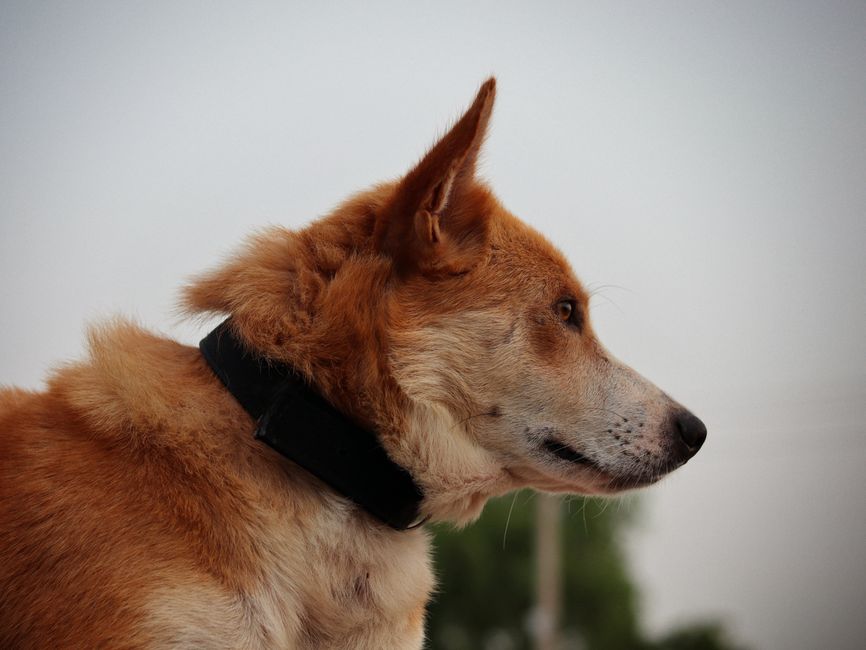
According to the American Pet Products Association’s 2023-2024 National Pet Owners Survey, roughly 66% of U.S. households own a pet — and Americans spend over $35 billion annually on veterinary care alone. I read that number and thought: someone is making a lot of money off our guilt. For years, every time a tech company released another “smart collar” or “AI-powered health monitor” for pets, I rolled my eyes. Hard.
I’ve had dogs my whole life. I grew up watching my grandmother press her palm to a dog’s belly and know — just know — something was off. That felt like real animal intuition. A Bluetooth-enabled device that tracks heart rate variability? That felt like a product designed for anxious millennials who’d rather stare at an app than actually observe their animals.
I was wrong. Not a little wrong. Significantly wrong. And the way I found out changed how I think about preventive pet care entirely.
Where My Skepticism Actually Came From
Before I get into what shifted, I want to be honest about the skepticism — because I think a lot of pet owners share it, and it’s not irrational.
The first generation of pet wearables was genuinely bad. Step counters that didn’t account for breed-specific gait. “Stress detectors” with no clinical validation. Devices that died after two weeks in the rain. I tried one early fitness tracker for my dog around 2018 and the app crashed more often than it loaded. The data it gave me — “your dog was moderately active today” — told me nothing I couldn’t see by watching him.
So my skepticism wasn’t technophobia. It was earned.
What I didn’t account for was how dramatically the underlying technology would change. The jump from basic accelerometer data to machine-learning models trained on veterinary health records is not incremental. It’s a different category of tool.
The First Signal That Something Had Changed
A family member — I’ll leave it there — had a senior Labrador on a newer AI-enabled monitor. The device flagged an unusual pattern in the dog’s nighttime movement and respiratory rate over a 72-hour window. The app didn’t say “your dog is sick.” It said the pattern was statistically outside the dog’s established baseline and suggested a vet conversation.
The vet found early-stage congestive heart failure. Caught early enough that medication management, not emergency intervention, was the path forward.
That’s not a miracle. That’s pattern recognition at scale — the kind a human observer, even a loving and attentive one, simply cannot perform at 3 a.m. every night for months on end.
That story didn’t immediately convert me. But it made me stop dismissing the category entirely.
How These Devices Actually Work — Without the Marketing Fluff
Here’s what I wish someone had explained to me earlier, stripped of the product-page language.
Modern AI pet health monitors — devices from companies like Whistle, Fi, and PetPace, among others — don’t just collect raw data. They establish a personalized baseline for your specific animal over days or weeks. Resting heart rate. Respiratory rate. Sleep cycles. Activity distribution throughout the day. Some newer devices also track temperature and even electrodermal signals.
The AI layer matters because individual variation between animals is enormous. A healthy resting heart rate for a Greyhound looks alarming on a chart designed for a Beagle. Models trained on broad veterinary datasets can account for breed, age, weight, and prior health history — and then flag deviations that matter, rather than flooding you with noise.
PetPace, for example, has published peer-reviewed research in veterinary journals on their monitoring system’s ability to detect pain and physiological stress. That’s a meaningful distinction from consumer wellness gadgets.
The better platforms also integrate with veterinary records, so when you do go to the vet, you’re walking in with weeks of objective physiological data — not just “he seemed a little off last Tuesday.”
Setting One Up: What the First Two Weeks Actually Look Like
When I finally stopped being stubborn and tried a current-generation device on my own dog — a seven-year-old mixed breed with a history of intermittent GI issues — here’s how it went.
Days 1–3: The calibration phase. The device is essentially learning what “normal” looks like for your animal. Don’t expect actionable alerts yet. This phase requires the dog to just wear it, which — depending on your dog — ranges from completely unbothered to a theatrical production. Mine ignored it after about four hours.
Days 4–10: Baseline solidifies. The app starts showing trends rather than just raw readings. I could see that my dog’s resting respiratory rate consistently ticked up slightly on days when temperatures exceeded 85°F — something I’d never quantified before, even though I knew heat affected him.
Days 11–14: The first real signal. I got an alert that his nighttime activity had increased and his resting heart rate was elevated compared to his two-week baseline. Not dramatically. But consistently, over three nights. I almost dismissed it — he’d been to the dog park, maybe he was just tired.
I called my vet anyway. She suggested we run a basic panel. He had a low-grade urinary tract infection — the kind that, in older dogs, can escalate to kidney involvement if left untreated. Caught early. Antibiotics. Done.
Would I have caught that without the monitor? Honestly — maybe not until he was visibly uncomfortable. Dogs are masters at masking pain and discomfort. By the time the behavioral signals are obvious to a human observer, the problem is often further along.
What the Data Looks Like in Practice — and Where It Gets Complicated
Here’s where I want to push back on some of the breathless coverage these devices get.
The data is only as useful as your ability to act on it — and your vet’s willingness to engage with it. I’ve talked to pet owners who printed out weeks of heart rate data and were met with a veterinarian who didn’t know what to do with it. That’s a real gap. Not every practice is equipped to interpret consumer-grade wearable data, and the standards for what constitutes a “clinically significant” deviation vary.
The false positive problem is also real. Especially in the early weeks of use, before the baseline is robust, some devices flag things that turn out to be nothing — a dog that slept restlessly because of a thunderstorm, not because something was wrong. This can create anxiety in owners who are already prone to it. I’ve seen this pattern in online communities dedicated to specific breeds: someone gets a monitor, gets an alert, rushes to the vet, finds nothing, and either trusts the device less or trusts it too much going forward.
The calibration is ongoing. Most platforms recommend a recalibration period after any significant life change — new home, new pet in the household, post-surgery recovery, seasonal shifts.
The Conditions These Monitors Are Genuinely Good At Catching Early
Based on the clinical literature I’ve read — and conversations with veterinary professionals — these are the areas where AI monitoring has shown the most meaningful early-detection value:
- Cardiac conditions: Changes in resting heart rate and respiratory rate at night are among the earliest physiological signals of heart disease progression in dogs and cats.
- Respiratory issues: Elevated breathing rate during rest — not exercise — is a well-established early indicator of fluid accumulation and other pulmonary concerns.
- Pain and discomfort: Disrupted sleep architecture and reduced voluntary movement often precede visible behavioral signs of pain by days.
- Metabolic changes: Shifts in activity patterns and water consumption (tracked indirectly through some platforms) can signal early diabetic changes or thyroid issues in cats especially.
- Post-surgical recovery: Monitoring whether a recovering animal is truly resting — and whether vitals are trending correctly — removes a lot of guesswork from at-home recovery.
These aren’t scenarios where the device replaces your vet. They’re scenarios where the device gives your vet something concrete to work with, earlier than they’d otherwise have it.
Choosing a Device Without Getting Burned by Marketing
If you’re considering one of these monitors, a few things I’d actually look for — not what the product page emphasizes:
Does the company publish clinical validation data? Not testimonials. Not case studies on their own blog. Peer-reviewed research, or at minimum, partnerships with veterinary schools or clinical trials. This separates health-grade monitoring from glorified activity trackers.
How is the baseline built? Devices that require only 24-48 hours to establish a baseline are cutting corners. Physiological patterns need at least a week of data — ideally two — to filter out noise.
What does the alert system actually look like? Vague notifications (“your pet may be stressed”) are close to useless. Look for alerts that tell you what changed, how much it changed relative to baseline, and for how long — so you can have an actual conversation with your vet.
Battery life and wearability. A device your dog won’t tolerate, or that dies every 48 hours, doesn’t matter how sophisticated its AI is. Real-world wearability is underrated.
Data portability. Can you export the data in a format your vet can actually use? Some platforms are closed ecosystems. That’s a problem if you want your veterinary team to engage with the data meaningfully.
What Changed in My Thinking — and What Didn’t
I no longer think these devices are gimmicks. The underlying technology — machine learning applied to continuous physiological monitoring — is genuinely capable of catching patterns that human observation misses. The clinical evidence, at least for the better-validated platforms, is real.
What I haven’t changed my mind about: these monitors are tools, not replacements for veterinary relationships. The pet tech industry has a tendency to market toward anxiety — “know what your pet is feeling at all times” — in ways that can actually undermine trust in your own observational instincts and create a compulsive data-checking loop that serves the subscription model more than it serves your animal.
The best use case I’ve found is for senior pets, pets with known chronic conditions, and pets in post-surgical recovery — situations where the stakes of missing a subtle change are higher, and where continuous objective monitoring adds something that periodic vet visits simply can’t provide.
For a healthy three-year-old dog with no history of issues? I’m less convinced the constant monitoring adds proportionate value. Your money might do more good as a dedicated fund for unexpected vet bills.
A honest caveat before you act on any of this: everything I’ve described reflects my own experience and the clinical literature available through mid-2026. The regulatory landscape for AI-powered health devices — for humans and animals — is still catching up to the technology. The FDA does not currently classify most consumer pet health monitors as medical devices, which means the validation standards are self-imposed by manufacturers, not mandated. That matters. A device claiming to detect early heart disease carries a different responsibility than a step counter — and right now, the market doesn’t fully enforce that distinction. Until clearer clinical standards exist, the best filter you have is your own veterinarian’s opinion on whether a specific device’s data is worth acting on. Ask them before you buy. That conversation alone will tell you a lot.




Publicar comentário