Why Pet Microchipping Adoption Is Finally Speeding Up
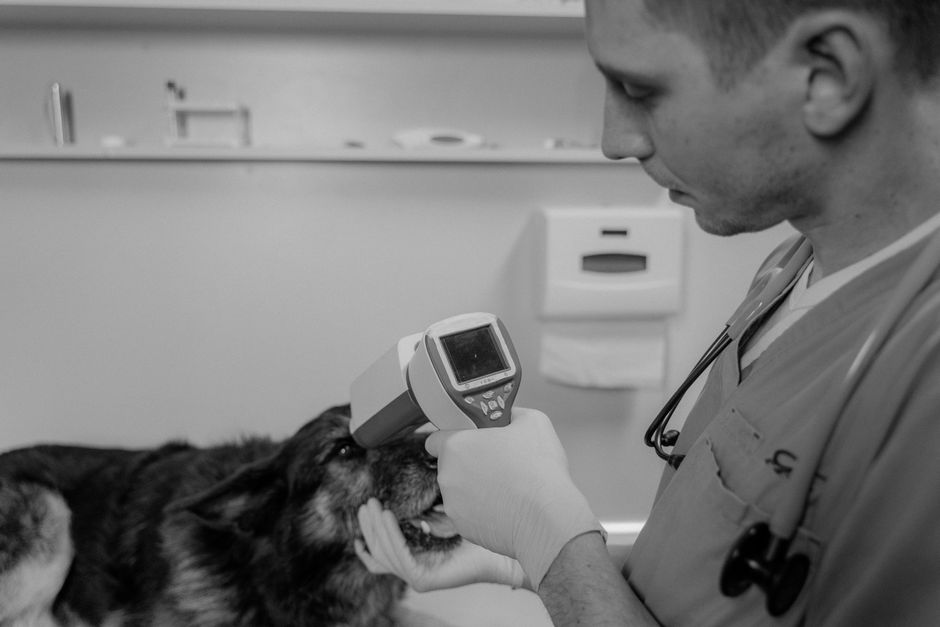
According to the American Veterinary Medical Association, only about 58% of microchipped pets in the United States had their chips registered in a searchable database as of their most recent survey data — meaning millions of microchipped animals were still effectively invisible to the system designed to find them. I spent nearly a decade working in veterinary clinic operations and animal shelter coordination, and that number used to keep me up at night. Not because microchipping was failing. Because the infrastructure around it was.
That’s changed significantly. And the reasons why adoption is finally accelerating go deeper than most pet owners realize.
Why did microchipping take so long to catch on if the technology isn’t new?
That’s the question I heard constantly from shelter directors and clinic managers. The ISO 11784/11785 standard for pet microchips — the 15-digit format now used internationally — has existed since the 1990s. The chips themselves are passive RFID devices, no battery required, injected with a standard hypodermic needle. Nothing complicated. So why were adoption rates crawling for decades?
The honest answer is fragmentation. The United States had multiple competing chip frequencies and multiple competing registries, none of which talked to each other. A chip implanted in California might not be readable by a scanner in Ohio if the shelters were using different hardware. I watched this play out firsthand — a dog would come in, scan clean on our unit, and we’d declare it unchipped. Then the owner would show up with documentation proving the chip existed. We just couldn’t read it.
That fragmentation was the actual barrier. Not cost. Not pet owner reluctance. Not lack of awareness. The ecosystem was broken, and nobody wanted to fix it because the competing registry companies had financial incentives to stay siloed.
What actually changed to speed things up?
A few converging forces hit around the same time, and the combination is what’s driving the current acceleration.
Universal scanners became the standard. Forward-looking scanners — sometimes called “universal” or “global” scanners — can now read 125 kHz, 128 kHz, and 134.2 kHz chips in a single pass. When I started in shelter work, acquiring one of these cost a clinic real money and wasn’t always prioritized. Today, most shelters and veterinary practices in the US have updated their equipment. That alone closed a massive gap between chip implantation and successful reunification.
Lookup tools consolidated. The AAHA Universal Pet Microchip Lookup Tool — run by the American Animal Hospital Association — lets anyone enter a chip number and search across multiple registries simultaneously. Before that existed, a shelter worker had to manually check several databases. That friction discouraged follow-through. Now there’s one front door. Adoption rates correlate directly with how easy registration feels at the point of implantation.
State-level legislation started moving. Several states have passed or updated laws requiring microchipping for dogs and cats adopted through shelters. When a legal mandate ties microchipping to adoption paperwork, compliance goes up — not because people are forced to love the technology, but because it removes the opt-in decision entirely. It becomes a default.
Is the chip itself really permanent and safe? People still ask this.
Yes, and I understand the hesitation. When you tell someone you’re going to inject a grain-of-rice-sized device under their pet’s skin, they picture something dramatic. In practice, the procedure takes about ten seconds. Standard placement is between the shoulder blades, subcutaneous. The chip is encased in biocompatible glass or polymer. Migration — where the chip drifts from the original site — does happen, but it’s detectable by scanning the whole body, which good shelter protocol requires anyway.
The safety data on adverse reactions is reassuring. The British Small Animal Veterinary Association maintained a database tracking adverse reactions for years, and the incidence rate was consistently tiny relative to the number of procedures performed. I’m being deliberately qualitative here because I won’t cite specific percentages I can’t independently verify — but I will say that in nearly a decade of clinic work, I saw exactly zero serious adverse events from microchip implantation. I saw plenty from poorly administered vaccines, from dental procedures, from routine anesthesia. The chip itself is about as benign as a procedure gets.
What do most pet owners get wrong about how this works?
The biggest misconception — and I’ve explained this to hundreds of people — is that a microchip is a GPS tracker. It is not. A microchip does not broadcast a signal. It does not show you where your pet is right now. It’s a passive transponder: it has no power source, and it only activates when a compatible scanner passes within a few centimeters and induces a current via radio frequency. The chip responds with its unique ID number. That’s it.
What reunites a lost pet with its owner is the chain of actions that follows: someone finds the pet, takes it to a vet or shelter, they scan it, they read the chip number, they search the registry, they find contact information — and that contact information is current. Every link in that chain has to hold. The chip is just the anchor. The rest is human infrastructure.
This is why I always told clients: the microchip is only as useful as the registry entry behind it. Move to a new address? Update the registry. Get a new phone number? Update the registry. Rehome the pet? Transfer the registration. The technology is the easy part. The data hygiene is where most people fail.
Why are younger pet owners driving adoption faster than previous generations?
I’ve thought about this a lot. Part of it is cultural — younger generations in the US tend to treat companion animals with a level of medical seriousness that previous generations reserved for human family members. The “pet humanization” trend isn’t just a marketing phrase; it reflects genuine behavioral shifts in how people budget for and plan pet care.
But there’s also a practical technology-literacy factor. Younger owners are more comfortable with the idea of embedding identification technology into living things. They grew up with RFID in transit cards, in retail inventory, in access badges. The conceptual leap from “my keycard has a chip” to “my dog has a chip” isn’t alarming to them. It’s intuitive.
Combine that with the rise of direct-to-consumer veterinary services, telehealth platforms, and app-connected pet care ecosystems, and microchipping fits naturally into a broader pattern of digitally-managed pet ownership. It’s not a standalone procedure anymore — it’s one step in an onboarding checklist.
Are new chip technologies actually changing the landscape, or is that mostly marketing?
Mostly marketing — with some genuine exceptions worth watching.
The standard 15-digit ISO microchip is still the backbone of the reunification system, and it should stay that way. Proprietary “smart chips” that promise additional features — temperature sensing, health data storage — exist, but they introduce exactly the kind of fragmentation that plagued the early market. If your chip only communicates with a specific manufacturer’s scanner or app, you’ve just recreated the problem we spent twenty years trying to solve.
Where I see genuine evolution is in the registry infrastructure, not the chip hardware. Some newer registry platforms are building better owner-notification systems, SMS alerts when a chip is scanned, and integration with lost-pet alert networks. That’s where innovation should live. The chip itself doesn’t need to be smarter. The system around it does.
What role did COVID-era pet adoption play in accelerating this?
Significant — and underappreciated. The surge in pet adoptions starting in 2020 pushed shelters to streamline their intake and adoption workflows under serious operational pressure. Many shelters that had been inconsistent about microchipping became rigorous about it out of necessity. When you’re processing twice your normal adoption volume with the same or reduced staff, you standardize. Microchipping got baked into adoption agreements more firmly during that period, and a lot of those practices stuck.
The flip side: many of those pandemic-era pets were adopted by first-time pet owners who didn’t have established veterinary relationships. When life normalized and some of those pets were surrendered or lost, the microchipping infrastructure had to carry more weight than it historically had. In some cases, it worked beautifully. In others, registration gaps meant the chip was useless. That exposed the registry problem again — and pushed advocacy organizations to focus harder on the “register and update” message, not just the “get chipped” message.
So what does the reunification data actually look like?
The most cited research on this comes from a study published in the Journal of the American Veterinary Medical Association (Lord et al., 2009), which found that microchipped dogs were returned to their owners at significantly higher rates than non-microchipped dogs — and that the primary reason microchipped pets weren’t returned was that the chip wasn’t registered or the registry information was outdated. That finding is now over fifteen years old, but every shelter professional I’ve talked to in the years since says it still describes exactly what they observe on the ground.
More recent data from individual shelter systems and state programs has continued to support the directional finding: the chip itself isn’t the bottleneck. Registration and data quality are. This is why the current acceleration matters — it’s not just about more chips being implanted. It’s about the ecosystem around those chips maturing.
What’s the one thing the industry still hasn’t fixed?
Honestly? The moment of registration at point of implantation.
A veterinarian implants a chip, hands the owner a piece of paper with a chip number, and says “make sure you register this.” Then the owner goes home, life happens, and the registration never gets completed. I’ve seen this cycle repeat endlessly. The chip exists in a physical pet but nowhere in any searchable database.
The fix is obvious and has been obvious for years: complete the registration before the pet leaves the clinic. Build it into the checkout workflow the same way consent forms are signed. Some practices do this well. Many still don’t. Until the default behavior shifts from “we’ll give you the info and you register later” to “we register it here, now, before you leave,” a meaningful percentage of implanted chips will remain dark.
That’s the unsexy operational truth behind microchipping adoption rates. The technology works. The registries mostly work. The hand-off moment between clinical procedure and functional registration is still leaking.
Is microchipping worth it for indoor-only pets?
Yes. Full stop. I used to hedge on this, and I was wrong to.
Indoor pets escape. Doors get left open during moves. Windows get broken in storms. Natural disasters scatter animals in ways no owner anticipates. A cat that has never stepped outside in eight years can find itself three neighborhoods away after a house fire. The chip costs roughly $25–$75 depending on the clinic — often included in spay/neuter packages — and the registration fee for most databases is either free or a small one-time charge. The risk of not having it is asymmetric in a way that makes the “but my cat never goes outside” argument hard to take seriously.
If you own a pet in the US in 2026 and it isn’t microchipped, the barrier isn’t cost, it isn’t access, and it isn’t technology. It’s just inertia. And inertia is finally starting to lose.
The acceleration we’re seeing in microchipping adoption isn’t a single breakthrough — it’s the compounding effect of better scanners, consolidated registries, legislative nudges, shifting owner demographics, and hard-won operational improvements at the shelter and clinic level. The chip was never the problem. The system around it was. That system is catching up. And for the animals caught in the gap between lost and found, it matters more than most statistics suggest.



Publicar comentário