Micro Pig Care Essentials: What First-Time Owners Actually Need
You’re standing in a farm supply store at 10:15 on a Saturday morning, holding a bag of “mini pig pellets” in one hand and your phone in the other, watching three different YouTube videos that all contradict each other. The pig arrives Tuesday. You have no idea what you’re doing.
That’s the moment most new micro pig owners actually meet reality — not when they’re scrolling through Instagram reels of piglets in tiny sweaters, but when they realize that no one gave them a clear, honest roadmap. And here’s the thing most people get wrong from the start: the problem isn’t that micro pigs are hard to care for. The problem is that most people are preparing to own a pet and they’re actually getting a highly intelligent, emotionally complex animal that will test boundaries, manipulate routines, and demand consistency in ways a dog or cat simply won’t. That shift in expectation changes everything.
1. “Micro Pig” Is a Marketing Term, Not a Breed
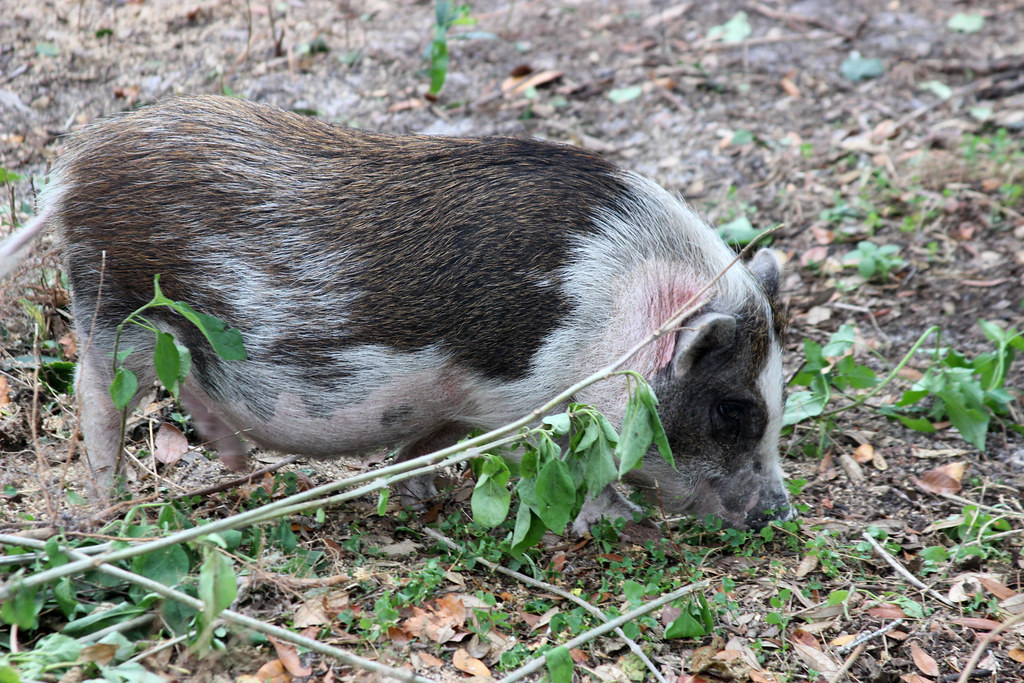
Let’s get this out of the way early. There is no recognized breed called a “micro pig” or “teacup pig.” What you’re likely getting is a selectively bred potbellied pig, possibly mixed with a smaller heritage breed. Reputable breeders in the US will tell you this plainly. Disreputable ones will show you a six-week-old piglet and promise it stays that size forever.
It doesn’t. A pig sold as “micro” can still reach 50 to 150 pounds depending on genetics and feeding. Some hit 200. Veterinary professionals and pig sanctuaries across the country have documented this pattern repeatedly — pigs surrendered at two or three years old because they grew far beyond what the owner expected.
Before you bring any pig home, ask the breeder to show you the parents in person. Not in photos. In person. A parent that weighs 60 pounds at age three is a reasonable indicator. A breeder who refuses or gets evasive is a red flag you should not ignore.
2. Feed Is the Single Biggest Variable You Control
Pigs are opportunistic eaters. Left to their own devices, they will eat until they’re sick, beg constantly, and learn to open refrigerators — yes, really, some do. This isn’t a character flaw. It’s biology. In the wild, pigs root and forage all day because food is scarce. In your kitchen, it isn’t.
A well-balanced diet for a small pet pig typically centers on a pellet formulated specifically for miniature or potbellied pigs — not dog food, not cat food, not table scraps as a staple. These species-specific pellets are designed to provide the right ratio of fiber, protein, and micronutrients without overloading on calories. You can find them at farm supply retailers and increasingly at larger pet chains.
Most adult mini pigs do well on roughly 1% to 2% of their body weight in pellets daily, split into two meals. A 50-pound pig gets roughly half a pound of pellets per day, supplemented with fresh vegetables — leafy greens, bell peppers, cucumber — and unlimited fresh water. Fruit is fine in small amounts; it’s high in sugar and pigs will choose it over everything else given the chance.
One critical note: do not free-feed. Leaving food out all day is one of the fastest routes to obesity, which brings joint problems, cardiovascular strain, and a shortened lifespan. Schedule meals. Stick to them. Your pig will protest loudly. Hold the line anyway.
3. Rooting Is Not Destructive Behavior — It’s a Need
A pig that’s tearing up your backyard or pushing furniture around with its snout isn’t being bad. It’s being a pig. Rooting — using the snout to dig, push, and forage — is a fundamental behavioral need, not an optional quirk.
If you don’t give your pig an appropriate outlet for this, it will create one. That might mean your garden, your carpet, or the corner of your drywall. The fix is straightforward: designate a rooting area. Outside, a patch of loose soil or sand works well. Inside, a rooting box — a large plastic bin filled with smooth river rocks, large rubber balls, or even dried beans — gives the pig something to dig through safely.
Pigs that have regular rooting access are measurably calmer. Pigs that don’t become anxious, food-obsessed, and harder to manage. This isn’t an enrichment bonus. It’s basic welfare.
4. What a Real First Month Looks Like (Including the Ugly Parts)
Week one: the pig screams. Not squeals — screams. Every time you pick it up, every time you move it away from something it wants, every time a door closes in its general direction. This is normal. It is also extremely alarming if you weren’t warned. Neighbors will notice. You will second-guess everything.
Week two: you start to see personality. The pig figures out your schedule faster than you expect. It knows what time you wake up. It knows which family member is the softest touch for treats. It starts following you room to room.
Week three: you realize your pig has been testing where the boundaries are and you’ve been inconsistent. It gets on the couch three times because three different people in your house had three different reactions. This is the moment most training problems are born.
Week four: if you’ve been consistent — same rules, same schedule, same response to bad behavior — you’ll see real progress. If not, you’ll be managing chaos for months. Consistency from every person in the household is non-negotiable. One soft spot unravels the whole thing.
The ugly part nobody posts about: there will be a day somewhere in week two or three where you seriously wonder whether you made a mistake. That’s almost universal among new pig owners. It passes — but only if you push through it with clear expectations instead of giving up on structure.
5. Vet Access Is Harder Than You Think
Not every veterinarian sees pigs. In fact, in most suburban and urban areas in the US, finding a vet with genuine swine experience requires research before you bring the animal home — not after. A standard small animal vet may technically treat your pig, but may not be current on pig-specific conditions, vaccines, or dental care.
Pigs need annual wellness exams, hoof trims every few months (a neglected hoof curls painfully and causes lameness), and tusk management as they age. They’re also susceptible to respiratory infections, skin conditions like mange and sunburn, and internal parasites. A vet who has worked with potbellied pigs specifically will catch things a generalist might miss.
Call around before you commit to bringing a pig home. Ask directly: “Do you see potbellied or miniature pigs regularly?” If the answer is hesitant or vague, keep calling. Finding that vet in advance is one of the most practical things you can do.
6. What Doesn’t Work — And Why People Keep Trying It Anyway
Punishment-based training. Pigs do not respond to punishment the way dogs sometimes do. Yelling, spraying with water, or physical correction teaches a pig to fear you, not to stop the behavior. Fear in pigs leads to aggression. A pig that bites out of fear is much harder to rehabilitate than one that was simply never taught properly. Positive reinforcement — small food rewards, calm praise — is not just the kind approach, it’s the effective one.
Keeping a pig alone long-term. Pigs are social animals. A pig left alone for eight to ten hours a day, five days a week, with no enrichment and no companion, will develop behavioral problems. This doesn’t mean everyone needs two pigs — though two is genuinely better — but it does mean you need to think seriously about enrichment, your actual daily schedule, and whether a pig fits your life or just your idea of your life.
Treating the pig like a small dog. Pigs learn differently, motivate differently, and communicate differently. They’re actually considered among the more cognitively complex domestic animals — some research puts them on par with three-year-old children in certain problem-solving tasks. That intelligence works for you when you’re training with clarity and consistency. It works against you when you’re inconsistent or underestimating what the animal is processing.
Assuming small size equals low maintenance. Smaller body, same behavioral needs. A 30-pound pig still needs enrichment, social contact, hoof care, regular vet visits, and consistent boundaries. The maintenance load does not scale down with the body weight.
7. The Zoning Question You Need to Answer Before Tuesday
In a significant number of US municipalities, pigs — including miniature ones — are classified as livestock, not pets. That means they may be prohibited in residential zones even if cats and dogs are fine. This varies by city, county, and even HOA rules.
Check your local ordinances before you acquire the animal. Call your city or county clerk’s office and ask specifically about potbellied or miniature pigs as pets. Get the answer in writing if you can. People have had to surrender pigs they loved because they didn’t check — and that’s a situation nobody wants to be in, least of all the pig.
Start Here, Not There
You don’t need to have everything perfect before your pig arrives. But three things you can do this week will make the first month significantly more manageable:
- Call one vet today — just one — and ask if they see potbellied pigs. If yes, schedule a new patient intake for the first week after your pig arrives. If no, call the next one on your list.
- Build a rooting box this weekend. A plastic storage bin, some smooth river rocks from a garden center, and twenty minutes. That’s it. Have it ready before the pig walks in the door.
- Have one household conversation — not a text thread, an actual conversation — about the rules: what the pig is allowed to do, who feeds it and when, and what everyone’s consistent response will be when it does something it shouldn’t. Write it on a sticky note if you have to. Consistency starts before the pig arrives.
The pig is going to be a handful. It’s also going to be one of the more interesting relationships you’ve had with an animal. Those two things are not contradictions — they’re the deal.


Publicar comentário